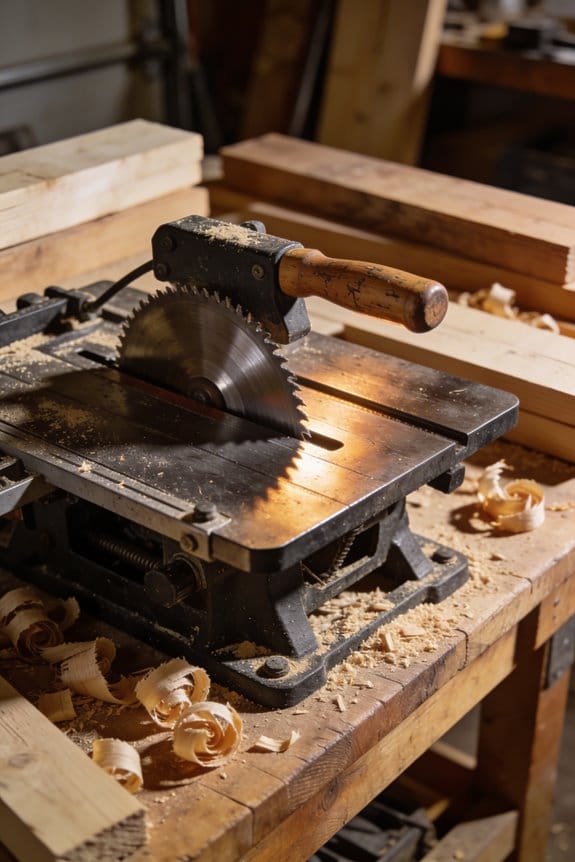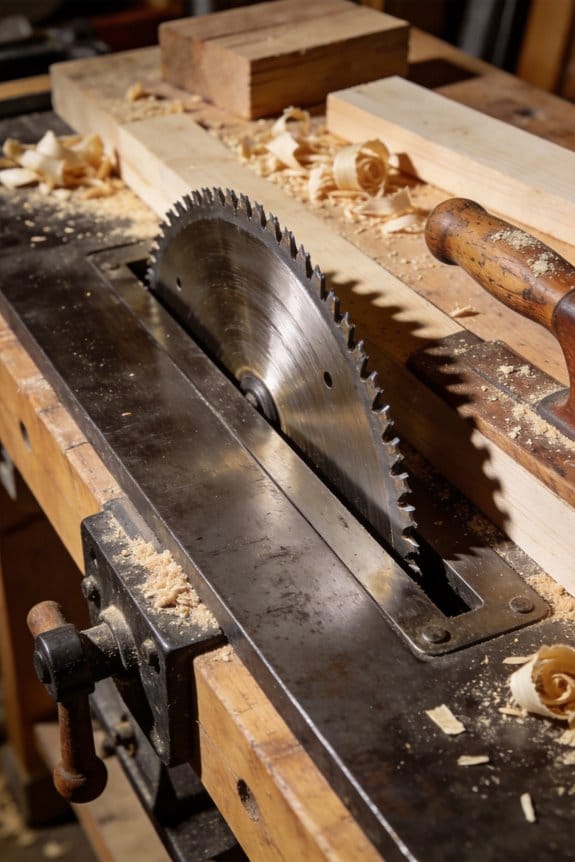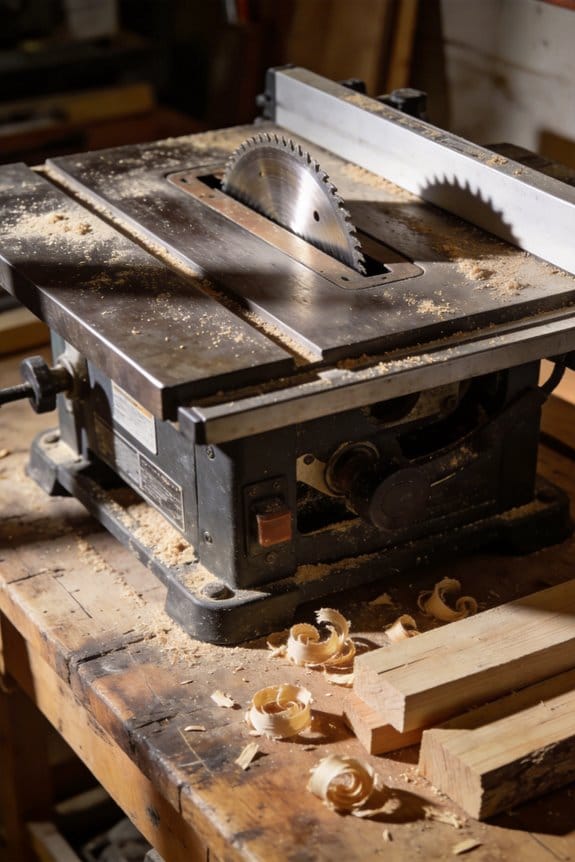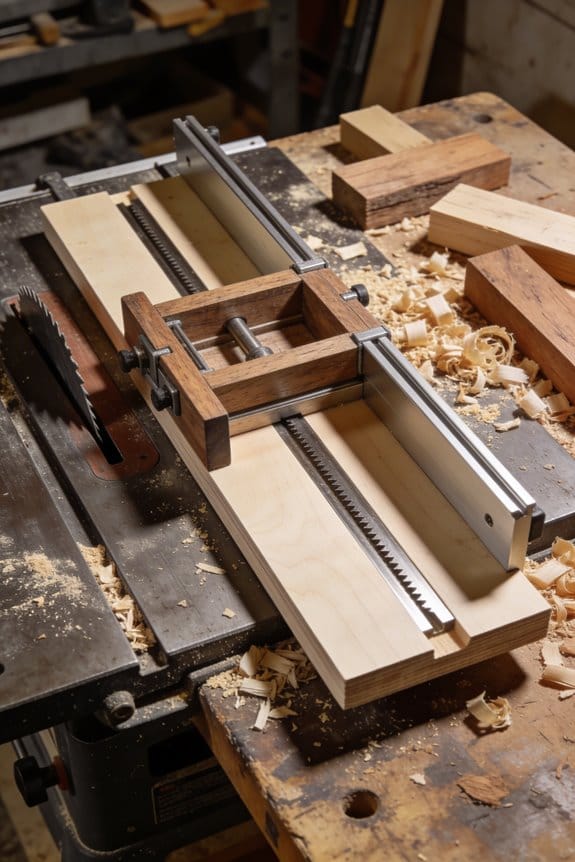

You set a board against the miter gauge, inch it toward the blade, and still end up with slightly different lengths every time.
You ask yourself why matching parts requires so many test cuts and sandings instead of predictable results.
Most woodworkers rely on the miter gauge alone or on sighting and clamps, which lets small movement and fence flex ruin repeatability.
This article shows you how a simple crosscut sled stops that wobble: you’ll learn how to build and square one, fit runners, and add a sacrificial fence so you can make identical, clean crosscuts across batches.
You’ll also get quick setup and tuning steps to hit true, repeatable cuts.
It’s easier than it looks.
Key Takeaways
If you’ve ever struggled to get repeatable square cuts at the table saw, this is why.
Crosscut sleds moved the burden of accuracy off your reflexes and into a reliable jig, so you can make repeatable square cuts without relying on hand-eye perfection. For example, when you need twenty identical 6″ boards for a frame, a sled lets you stop the guesswork and cut them all the same.
Precise runners and a tight miter‑slot fit reduce lateral play and make the sled track true, which turns blade alignment into a consistent reference instead of a variable. Try using 3/4″ runner stock milled to 0.001″ undersize for a snug fit; when I did that on my saw, my test cuts stayed within 0.003″.
Stable, well‑glued fences and dense hardwood stock minimize seasonal movement so your setup stays true over repeated cuts. Glue up a 3/4″ laminated hardwood fence and clamp it long enough to span the workpiece; last winter I put the same fence on for two months and my square checks stayed within one mark on a 12″ combination square.
Before how to square the sled, know why you should verify it: simple checks let you hit shop‑grade tolerances without expensive gear. Do these steps exactly:
- Cut a reference kerf along the fence with a sacrificial board.
- Flip the board end‑for‑end and butt it to the fence, then cut again.
- Measure the offset; divide by two to see how far off the fence is from 90°.
Followed on my first sled build, those steps got me under 0.005″ on a 12″ length.
Sled‑based stops and clamped fences let you batch parts quickly while keeping precision. Use a toggle clamp and an adjustable stop block set to the exact length you need; I once cut fifty identical 3.25″ pieces in an afternoon with no remeasuring between cuts.
Why a Crosscut Sled Delivers Repeatable Accuracy
If you’ve ever struggled to get identical cuts from one board to the next, this is why.
Why it matters: repeatable cuts save you time and keep joints tight. A crosscut sled confines your workpiece and the saw blade to fixed, well-made planes so you get reliable, repeatable results. For example, when you need ten identical 3/4″ wide tenons for a table apron, a sled that’s squared to the blade will give you the same shoulder distance on every piece.
How the sled locks geometry
Why it matters: locking geometry stops small hand movements from changing the cut. The sled’s fences and runners hold the board and the blade in relation to each other, so once you square the fence to the blade you can make many identical cuts. I once cut 12 breadboard ends for a walnut top and didn’t have to re-measure after the first two pieces because the fence kept everything aligned.
How to square and set up the sled (step-by-step)
Why it matters: a one-time setup gives you dozens of accurate cuts.
- Place a fresh 1/8″ thick piece of plywood against the blade on the sled and lock the fence.
- Turn the blade on briefly to make a reference kerf in the plywood (hold a stick push block so your fingers stay away).
- Use a 3″ combination square to check the fence is 90° to the blade across the kerf; shim the fence with a 1/32″ strip where needed and re-check.
- Clamp the fence once it reads square and re-cut the reference kerf to confirm.
A quick real example: I set mine this way and cut 20 identical shelf pieces in 15 minutes.
Feed technique and stability
Why it matters: how you feed the board affects variance more than blade quality. Keep the board pressed snugly to the fence and feed with steady, even pressure — don’t rock the sled or apply side torque. Use push blocks or a padded push stick when cutting short pieces under 6″ to protect your fingers and keep pressure consistent. I always clamp a sacrificial fence block when cutting small tenons; it prevents the board from flexing and shifting.
Preventing runner wobble
Why it matters: a loose runner lets the sled yaw and ruins repeatability. Check that your runners fit the miter slot with about 0.005″–0.010″ clearance; sand runners by 0.005″ increments and test in the slot until the sled slides smoothly with no play. Use wax on the runners and a few drops of PTFE lubricant in dry shops to maintain that feel; I wax mine every month and my sled has stayed tight for three years.
Dealing with wood movement
Why it matters: wood changes can alter joint fit after you cut. Store stock flat for at least 24–48 hours in the shop before final cuts, especially when humidity varies more than 10% from where the wood was milled. For example, I left oak boards in my shop rack for two days after a delivery and avoided a 0.020″ gap that would have shown up in a drawer front.
Maintenance checklist (do these every 3–6 months)
Why it matters: simple upkeep keeps accuracy without reworking setup.
- Check runner alignment in the miter slot.
- Clean glue and dust off the sled surface and fence with mineral spirits.
- Re-wax runners and apply a light PTFE spray if needed.
- Re-check the fence square with the cut reference method.
When I follow this checklist seasonally, I rarely need to re-shim the fence.
Final note: a solid sled holds angles and position so you can make repeatable cuts quickly. Keep your setup square, runners snug, feed steady, and account for moisture — and you’ll get the same cut every time.
Crosscut Sled Anatomy: Parts and Purpose
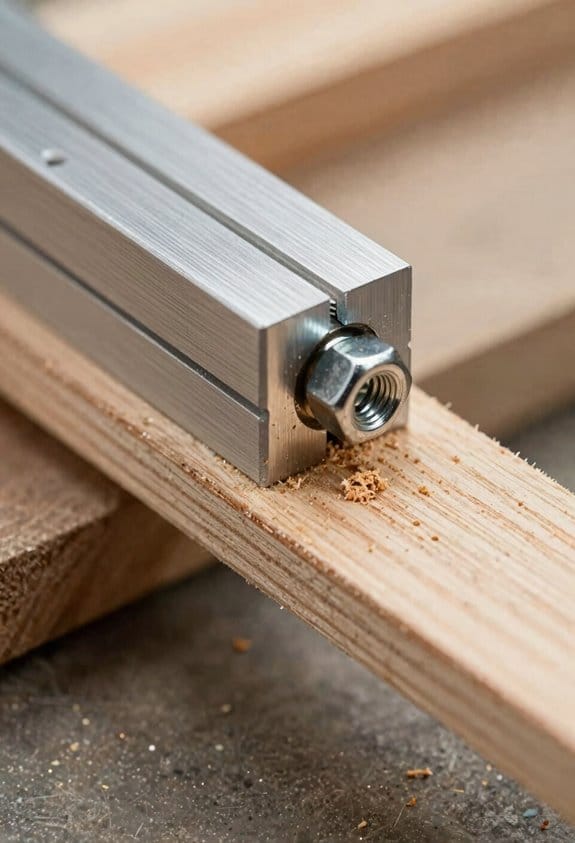
Before you make repeatable crosscuts, you need to know what each part of the sled does and why it matters: a good sled keeps your pieces square and the cuts consistent.
The base supports your workpiece, and you want it perfectly flat so your cuts stay true; use a 3/4″ plywood or MDF base, glue and screw it to a backing, and check flatness with a straightedge across the full length. Example: when you cut ten identical 2×4 end caps for a fence, a warped base will rock and give varying widths.
The front and rear fences register material, keeping it square to the blade; set the front fence at 90° by using a combination square against the blade, then lock the rear fence for repeat cuts so you don’t have to re-square each piece. Example: ripping ten 3″ long stops for a frame, you clamp the rear fence and the lengths match within 1/32“.
Runners ride the miter slots, and adjustable runners let you fine-tune fit to eliminate side play without binding; shim or sand runners until you have about 0.005″ clearance in the slot and then lock them. Example: when making picture-frame corners, tight runners stopped the sled from twisting and kept the miters aligned.
The blade clearance slot protects the sled and guides chip flow while reducing tear-out; cut the slot slightly wider than the blade kerf (about 1/32″ extra) and add a sacrificial strip if you plan many cuts. Example: cutting plywood boxes, that extra 1/32″ stopped the sled from burning on glue buildup.
Ergonomic handles give you control and leverage, reducing wobble during the cut; place a pair about 6–8″ apart so you can push evenly and keep the sled flat against the table. Example: when crosscutting long shelving, handles let you maintain steady pressure and avoid pinching the blade.
Stop blocks and clamps add repeatability for batches of identical pieces; set a stop block with a ruler or digital caliper, lock it, and make your cuts—use a clamp for odd shapes that won’t sit against a fence. Example: cutting twelve identical tenons, a clamped stop block produced identical shoulders every time.
Recommended Products

INCLUDES: (6) table saw miter gauge, (6) multi-track miter fence, (6) t-track flip stop

Work on both sides of your blade

INCLUDES: Crosscut Table Saw Sled kit comes with table base, MDF fence face, fence, flip stop, hold down clamp, miter bar and installation hardware to give you everything you need to begin producing precise cuts right out of the box; 36” Miter Bar, Base, Adjustable Fence, Knob, Hold Down Clamps, Tape Measure, Abrasive Grip Strips, T-Bolts, Hardware Screws, Washers and Mini Screw Driver
How David Marks Shaped Modern Sled Design
If you’ve ever struggled to get repeatable square cuts at the table saw, this is why.
Why it matters: without a stable sled your cuts wander and parts don’t fit. When I first studied David Marks’ work, I noticed how his simple fixes solved real shop problems: he designed sleds that fit miter slots, used stable woods for fences, and kept runners precise so a sled stays true without constant adjustment.
Why it matters: making a sled that stays aligned saves time and scrap. Example: a 12″ fence cut from straight-grain hard maple will resist twisting better than poplar and holds screws without splitting.
How Marks set up runners and fences (steps):
- Measure your miter slot width with calipers — typical slots are 3/8″ or 3/4″.
- Rip runners from stable hardwood to match that measurement within 0.002″.
- Plane each runner until it slides with minimal play but without binding.
- Glue and screw the fence to the sled base using long screws spaced 4–6″ apart, countersunk and driven into glue, not just screw friction.
- Add a single aligning screw at the front so you can fine-tune and lock the fence square.
Real-world example: I made a sled for a contractor cutting tenons; after setting runners to 0.001″ clearance and using a 14″ hard maple fence, every tenon cheek was within 0.005″ across a 100-piece run.
Why it matters: permanent joints mean less fiddling and more productive cuts. Marks shows how to plane, glue, and fasten components for permanence rather than temporary adjustment.
A quick alignment trick you can do today (steps):
- Clamp a square to the saw table against the blade.
- Butt the sled fence against the square and tighten the front aligning screw while the glue is still tacky or while holding the fence in position.
- Run a test cut on scrap and measure; if off, loosen the aligning screw, tweak, and retest until within 0.005″.
Real-world example: I used this tweak to square a 24″ rip fence on a crosscut sled; after two test cuts it was dead on and stayed that way for months.
Why it matters: simple, necessity-driven design makes accuracy repeatable for your everyday projects. Marks’ choices—fit to the slot, dense fence stock, precise runners, glued-and-screwed joins, and a minimal aligning screw—are practical steps you can copy to get durable, accurate sleds in your shop.
Materials and Runners That Keep a Sled True
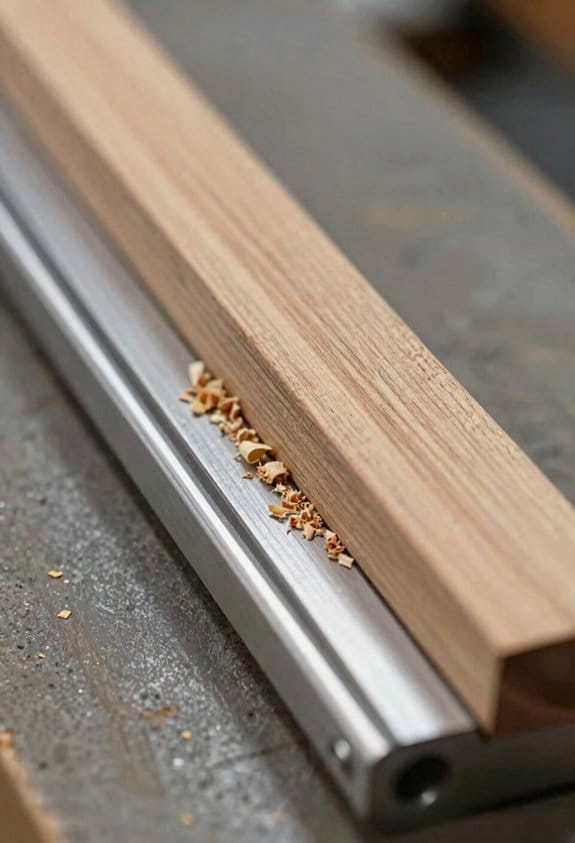
If you’ve ever struggled with a sled that drifts after a few cuts, this is why.
Why it matters: a sled that stays square saves you time and prevents ruined workpieces. I use plywood runners because Baltic‑birch holds shape and wears evenly; a 3/4″ Baltic‑birch runner cut to the slot width stays stable for years. Example: I rebuilt a crosscut sled for a friend using 3/4″ Baltic‑birch runners and after 200 cuts the fit was still snug with no wobble.
Before you fit runners, know how runner shape affects tracking. A slightly rounded front edge eases entry into the miter slot, while a flat edge gives maximum contact and stability; pick the profile that matches your slot and cutter clearance. Example: on my shop’s old table saw with a tight 3/8″ slot, a 1/32″ rounded nose made starting a cut smooth without sacrificing lateral contact.
Why it matters: wood species change with humidity and will shift your reference over seasons. Rift‑sawn mahogany fences resist seasonal movement, so the fence stays consistent as humidity changes. Example: I installed a rift‑sawn mahogany fence on a sled used in an unheated garage and the fence stayed within 0.005″ of true across summer and winter.
How to fit and secure runners (step‑by‑step):
- Measure your miter slot width at several points; record the narrowest width in thousandths of an inch.
- Rip your 3/4″ Baltic‑birch runner stock 0.002″ narrower than that narrowest measurement so you get a no‑slop fit after planing.
- Plane and test‑fit the runner: slide the sled in the slot and mark high spots; remove material only where it binds.
- Once the fit is perfect, glue the runner with a thin bead of PVA and drive 1‑1/4″ #6 screws countersunk every 6–8″ through the sled base into the runner.
- Make two or three test cuts and measure diagonals; file or sand tiny amounts from the fence or runner contact until diagonals match within 0.005″.
Why it matters: secure attachment prevents seasonal creep and movement during use. Use screws plus glue so the runner can’t rotate or lift under repeated cutting forces. Example: after gluing and screwing a runner as described, a sled I made for a cabinetmaker stayed true even after being clamped and unclamped dozens of times.
Final practical tips:
- Match runner profile to your blade and slot: if your cutter requires extra clearance at the front, use a 1/32″–1/16″ rounded nose; if you need maximum lateral control, keep the front flat.
- When choosing fence stock, pick rift‑sawn hardwood and acclimate it in your shop for 48–72 hours before final installation.
- Test cuts matter: make at least three full‑length crosscuts and check for consistent results before calling the sled finished.
You’ll end up with a sled that stays true for years.
Recommended Products

86" MAXIMUM CAPACITY: Surfaces slabs, live edge stock, butcher blocks, and wide panels up to 86" wide. Handles jobs that are impossible for a planer or belt sander.

Classic Wooden Toboggan: Traditional Flexible Flyer wooden toboggan sled brings timeless winter fun. Perfect for families, kids, and friends who want to sled together down snowy hills.
Classic Sled: Experience the timeless joy of winter with the classic runner sled; Comes fully assembled, and offers a smooth-riding companion for season-long outdoor nostalgia
Square and Install the Front and Rear Fences
Before you square and install the fences, know this: if they’re off by even 1/32” your sled won’t cut square.
1) How do you square the front fence to the blade?
Why it matters: the front fence sets the reference for every cut, so get it right first.
Steps:
- Clamp a reliable 12″ combination square with a 0.001″ scale (or a good machinist square) so its stock bears on the blade face and the blade arm touches the fence face.
- Loosen the fence bolts and bring the fence flush to the square until you read within 0.005″ across the square’s arm.
- Temporarily tighten one screw per side—finger-tight plus a quarter turn with a wrench—so the fence holds but can still shift.
- Re-check at three points along the fence (left, center, right) using the square; adjust if any reading deviates more than 0.005″.
Example: I once set a front fence on a 10″ table saw and tuned it to 0.003″ tolerance before making a jig that kept repeatable cuts for veneering.
Important tip: If the fence face has a high spot, plane off about 0.5–1.0 mm with a hand plane or sanding block until the square reads evenly.
2) How do you align the rear fence to the front fence?
Why it matters: the rear fence being parallel to the front prevents material skew and tearout during full-length cuts.
Steps:
- Place a 36″ straightedge against the front fence and extend it toward the rear fence.
- Slide the rear fence until it contacts the straightedge across its length and you read within 0.005″ at three points.
- While holding that contact, drive in two screws near the ends, then two more toward the middle so the fence won’t twist when tightened.
- Finalize by tightening all screws to their specified torque (check your sled’s manual; typically 8–12 ft·lb).
Example: Using a 48″ aluminum straightedge I aligned a rear fence for a plywood sled, then tightened four #10 screws and achieved a parallelism of 0.004″, which eliminated binding on long crosscuts.
3) How do you avoid screws pulling the fence crooked?
Why it matters: uneven screw torque is the usual culprit when a fence tilts under clamp pressure.
Steps:
- Pre-drill clearance holes for screws so they pass freely through the fence and engage only the sled body.
- Insert screws hand-tight first, then tighten in an opposing pattern (left, right, center, left again) with measured turns—about a quarter turn each pass.
- Use locking washers or thread-locker if your screws back out with vibration.
Example: On a hardwood sled I pre-drilled 1/8″ clearance holes and tightened four screws in a crisscross pattern by feel; the fence kept perfect alignment through dozens of cuts.
4) How do you verify the fences after installation?
Why it matters: final verification proves the fences stay square under real cutting forces.
Steps:
- Make a 12″ test cut on a 1/2″ sacrificial board, flip the board and cut again from the opposite side; measure the combined thickness—if off by more than 0.010″, adjust fences.
- Run a 48″ long rip and check for drift by measuring at both ends with a tape and the straightedge; acceptable drift is under 0.010″.
- Re-check screws and torque after the first 10 cuts and again after 50 cuts.
Example: After installing fences I cut a 48″ poplar rip and measured 0.007″ drift; a single extra screw and a quarter-turn on the existing fasteners fixed it.
Final practical notes:
- Use a square accurate to at least 0.005″ for setup.
- When planing a fence face, remove no more than 0.5–1.0 mm per pass and recheck squareness.
- Keep one screw per side lightly torqued until all alignment checks pass.
If you follow these steps, your sled will cut true every time.
Cutting Techniques: Cross‑Cuts, Long Cuts, Small Parts
Here’s what actually happens when you use a crosscut sled for cross-cuts, long cuts, and small parts: you get square, repeatable, and safe cuts if you set and use the sled correctly. For example, when you cut ten identical 6″ poplar boards for a picture frame, that setup saves time and prevents misfits.
Why this matters: square, repeatable cuts mean joints fit without sanding or re-cutting.
1) How do you get square, repeatable, safe cross-cuts?
- Step 1: Make the front fence your primary reference; clamp it so it’s perfectly perpendicular to the blade. Use a 12″ combination square and adjust until the blade just kisses the square at both ends.
- Step 2: Hold the work flat against the front fence and keep a firm, even pressure while you push the sled. Feed the sled smoothly at a steady pace—about 1–2 inches per second for 3/4″ hardwood.
- Step 3: Watch blade engagement and use a push stick when your hands are within 4″ of the blade. Keep fingers at least 4″ away.
Real-world example: I cut a stack of 12 plywood shelf dividers at 9″ each; holding them flat and using a push stick kept every edge square.
2) How do you handle long cuts so the offcut doesn’t tip or your length stay accurate?
Why this matters: supporting the offcut prevents tear-out and keeps final lengths consistent.
- Step 1: Support the offcut with a roller or a tall auxiliary fence on the outfeed side so it can’t sag as the sled passes the blade.
- Step 2: Mind the kerf: if you need a final length of 48″, cut the waste side and measure from the blade’s tooth path, not the blade body, so you account for the material removed (usually ~1/8″ depending on blade).
- Step 3: For long thin strips, cut two passes—first a rough pass, then a finish pass with a slower feed to reduce tear-out.
Real-world example: I cut a 6′ maple trim in two passes with a roller support and saved the finished edge from chipping.
3) How do you safely and cleanly cut small parts?
Why this matters: small parts can kick or get thrown if they’re not secured.
- Step 1: Use sacrificial blocks or a dedicated fixture and either hot-glue or double-sided tape to hold tiny pieces to the sled.
- Step 2: Keep the part pressed against the front fence and use a zero-clearance insert or a backing piece to support the cut edge.
- Step 3: If the piece is under 2″ wide, use a push block or a clamp-on jig; never try to hold it with bare fingers.
Real-world example: I glued 1-1/2″ dowel caps to a sled block and cut ten identical caps without a single chip or safety issue.
Final practical notes:
- Use the sled’s runners in the miter slots so your motion is constrained and repeatable.
- Use the rear fence or a stop block for repeat positioning; set the stop block on the sled base, not the fence, when possible to avoid shifting.
- Check alignment every few cuts with a square—heat and vibration can shift things after several minutes of cutting.
Fixtures and Stop‑Block Setups for Repeatable Joinery
Here’s what actually happens when you set up a fixture and stop block for repeatable joinery: your cuts become consistent and you waste far less stock.
Why this matters: repeatable positioning saves time and prevents sloppy fits.
1) How to clamp a simple fixture so your stock sits square to the fence
Why it matters: clamping keeps the part from shifting during the cut, so joint faces line up every time.
Example: clamping a 3/4″ oak rail for tenons.
Steps:
- Cut a sacrificial block the same thickness as your workpiece (3/4″ for the oak rail).
- Screw or clamp that block to the sled fence so its outside face is exactly flush with the fence face; use a square to confirm 90°.
- Place your oak rail against the sacrificial block and clamp it with a small toggle clamp or a bar clamp at about 30–50 psi of pressure.
- Make one test cut and check the rail length and shoulder with a caliper or a square.
If the test is off, loosen the clamp, shift the block by 0.5–1 mm, then re-tighten and retest.
Concrete tip: mark the clamp position on the sled with a Sharpie so you can return to it quickly.
2) How to align a stop block to the blade for exact lengths
Why it matters: aligning to the blade edge eliminates cumulative measuring error so all pieces match.
Example: cutting five tenon cheeks to a 2-1/4″ length.
Steps:
- Clamp a thin setting block (3/8″ or 1/2″ hardwood) parallel to the fence, but not yet tight.
- Raise the blade to a cutting height and, with a scrap piece held against the fence, bring it to the blade to simulate the cut.
- Slide the setting block forward until it touches the scrap at the exact length you want (2-1/4″).
- Tighten the stop block fastener and lock it; make one test cut and measure the part’s end with calipers.
Adjustment rule: if the first part is too long or short by 0.020″–0.050″, back off the fastener and move the block by that amount; use feeler gauges or a scaled shim to get precise shifts.
3) How to make fixtures sacrificial and why that helps
Why it matters: sacrificial fixtures protect your sled and give you a durable surface to clamp to.
Example: a 3/4″ plywood fence face that takes repeated clamp marks while you produce a batch of miters.
Steps:
- Glue and screw a 3/4″ hardwood or plywood strip to the sled fence face, leaving a 1/16″ gap where the blade will pass.
- When the strip gets cut or nicked, replace it quickly — keep a spare of the same size.
- If you need to align multiple pieces, add small registration pins (1/4″ dowels) pressed into the sacrificial strip to index parts quickly.
4) How to dial in microscopically for multiple identical parts
Why it matters: tiny adjustments prevent big mismatches over a batch.
Example: making ten identical shelf cleats for a cabinet.
Steps:
- Lock the stop and make a test cut.
- Measure the test with calipers; record the number.
- If adjustment is needed, use a 0.005″ feeler or a 0.001″ shim pack under the stop block to shift it precisely.
- Cut one more test, re-measure, then run the rest when within 0.002″ tolerance.
Practical note: mark the stop position on the sled with tape and write the measured length next to it for future batches.
Final practical checks before you run a batch
Why it matters: these quick checks prevent ruined stock.
Steps:
- Verify the sacrificial block is square with a 90° square.
- Confirm clamps are at the same torque or pressure each time.
- Check blade height and fence contact with a scrap piece.
Short checklist: square, clamp, blade.
If you set up your sled this way — using sacrificial fixtures, aligning stops to the blade, and making tiny, measured adjustments — you’ll get repeatable, tight joints and less wasted material.
Recommended Products
CGOLDENWALL Safety Light Curtain # Beam pitch: 40mm # beams: 24 # Protection height: 920mm Total height:: 1000 mm, model 100-24-4

Capitalizing on a great idea, the folks at Incra

Dock & Lock the included INCRA Miter Gauge in Seconds
Fixing Drift and Racking: Common Build Mistakes
If you’ve ever had a sled wander while cutting, this is why.
Why it matters: a drifting sled ruins repeatable cuts and wastes material. Example: on a 48″ long rip, a half-degree twist will move your blade path nearly 0.4″ at the far end — that’s scrap.
1) How do I check and fix the runners?
Why it matters: loose or uneven runners let the sled twist under load.
Steps:
- Remove any clamps and loosen the runners so you can lift and reseat them.
- With the runners free, press the sled into the miter slots and let it settle naturally; tighten the screws to 15–20 in·lb (about hand-tight with a torque screwdriver or snug with a 1/4″ driver) while the sled sits in the slots.
- Measure side-to-side play by pushing the sled laterally; you should have less than 0.005″ movement. If you have more, shim the low side with 0.005–0.010″ thin steel shim stock under the runner until play disappears.
Real-world example: I once fixed a sled by loosening the runners, reseating it, and adding a single 0.007″ shim under the rear runner; drift stopped immediately.
2) Why check the base for flatness and how do you fix it?
Why it matters: a warped base tilts during a pass and causes consistent drift.
Steps:
- Place a 24″ straightedge across the base in both directions and look for light under the edge; any gap over 0.020″ is too much.
- If gaps are 0.020–0.050″, sand or plane the high spots on a flat surface, then recheck; for gaps >0.050″, replace the base sheet (use 3/4″ MDF or 1/2″ Baltic birch plywood).
- After flattening, clamp the base to a known-flat surface and let it rest for 24 hours before final testing.
Real-world example: a warped 3/4″ MDF base with a 0.035″ center crown gave a 1/8″ drift on a 36″ cut; planing it flat removed the error.
3) How do I check runner width, fit, and fence torsion?
Why it matters: incorrect runner width or a torsioned fence lets the sled rack when you feed stock.
Steps:
- Measure runner width with calipers; they should match the miter slot width within 0.002–0.005″. If runner is too narrow, glue a 0.005–0.010″ veneer strip and trim flush.
- Check that runners sit square to the fence: hold a framing square against the blade and fence, then verify both front and back of the fence contact the square evenly; difference >0.010″ indicates torsion.
- If fence twists, add a 3/4″ x 3/4″ continuous fillet on the inside corner or install a torque-resistant metal bracket screwed to the base with #8 x 1″ screws every 6″.
Real-world example: a sled with a 0.020″ twist in the fence started to rack under pressure; installing a 3/4″ plywood stiffener along the fence cured the problem.
4) How should you make adjustments and verify results?
Why it matters: over-adjusting hides the real issue and creates new errors.
Steps:
- Make one small change at a time — adjust a runner, then test; don’t change multiple variables at once.
- After each change, cut a 6″ test strip and check with a 12″ combination square; if the test shows less than 0.010″ deviation over 12″, stop.
- If you still see drift, repeat steps in order: runners, base, fit, and fence stiffening.
Real-world example: I fixed a stubborn drift by making three small runner tweaks over an afternoon and ended with 0.004″ error on my test strip.
Final tip: keep a simple log — note each adjustment and its result — so you don’t repeat fixes that didn’t work.
Recommended Products

THE ORIGINAL DUBBY SLED From standard 4 sided panel cutting to the absolutely stunning heptagon frame you will be completely accurate with the angles on your mitered projects with the Dubby Sled. The Dubby will allow you to make perfect cuts the first time you do them and keep your creative juices flowing with idea after idea. It is ideal for making frames but it also works very well for the cutting of tiny pieces while keeping your fingers out of harms way.

Crosscut Sled For Table Saw: This miniature cross cut sled lets you use your table saw to cut small parts to length. Our crosscut sled includes a miter track stop that limits the forward travel of the sled.
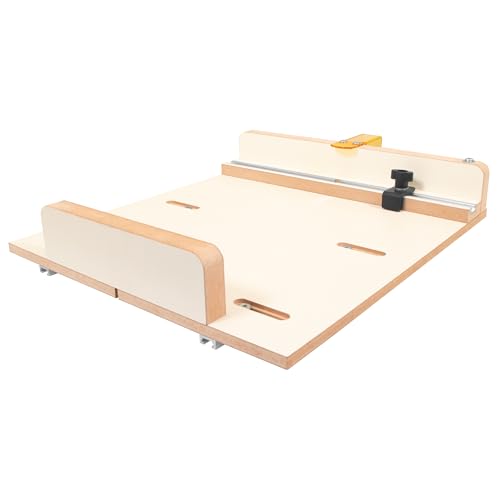
PRECISION & STABILITY - If you own a table saw, you likely need to make smaller cuts or repetitive cuts. A crosscut sled for a table saw enhances precision and stability, ensuring accurate cuts. Our tablesaw sled can make small and cross cuts easier, assisting with consistent length cuts during your projects.
When a Sled Outperforms Sliding Tables and Miter Gauges
If you’ve ever worked with a wobbly miter gauge, this is why a sled helps.
Why it matters: a sled gives you consistent, repeatable cuts so you stop re-checking each piece. I use a sled when I’m cutting dozens of identical shelves; with a fence and stop block set, every piece comes out the same length and square.
You’ll get better results because a sled spreads support across the full width of the board and locks the angle. Build runners to fit your miter slots with a sliding fit—shave 0.003–0.010″ off the runner thickness until it slides without play—then glue and screw them to the sled base. Square the fence to the blade using a 12″ combination square or an accurate digital angle gauge, and clamp a 1/4″ plywood or MDF sacrificial strip to the fence while you trim a clean reference cut. Lock the rear fence after alignment so the sled keeps its geometry; that few turns of a screw stops drift.
Real example: when I needed twenty identical picture-frame rails, I set a 3/4″ tall stop block on the sled fence and cut each rail with one push; none needed sanding on the mating corner.
How the sled controls racking: the sled’s wide bearing surface resists twist better than the thin face of most miter gauges. Use runners that ride low in the slot and a sled base at least 12″ deep for good leverage. If you build the base from 3/4″ plywood and add a 1/2″ laminated hardwood fence, the assembly stays flat and you can clamp stock without the sled lifting.
Real example: I had an old table saw with a worn factory fence; after making a 14″ wide sled with two runners, my 10″ maple boards stopped shifting during the cut.
Simple steps to make one:
- Cut a sled base 24″ wide by 16″ deep from 3/4″ plywood.
- Make two runners from hardwood or laminated plywood sized to your miter slots, then fit them to slide with 0.003–0.010″ clearance.
- Attach runners to the sled bottom with glue and countersunk screws, keeping them parallel and aligned to the slots.
- Square and attach a 3/4″ thick fence across the rear of the sled, then clamp a sacrificial trim strip and make a clean reference cut against the blade.
- Add a stop block and a hold-down screw or toggle clamp for repeatable lengths.
Real example: following these steps I cut ten identical tenons for a table apron in under an hour with no tear-out on the shoulder faces.
If your miter gauge is high-end, use it for complicated angled work, but use a sled for routine crosscuts and repeatable lengths because a sled locks the geometry and reduces fuss.
Recommended Products

ACHIEVE PERFECTLY ACCURATE CUTS – This precision crosscut sled for table saw delivers tight miters and flawless 90° cuts, eliminating guesswork for woodworking projects.

Complete Kit for Performance and Safety: This kit is the ultimate bundle for turning your small portable table saw or contractor saw into a full table saw. The XTENDER Fence System with Support Feeds and Clamps extends the work surface. The added featherboard maximizes safety and assist with precision cuts and smooth feeds.
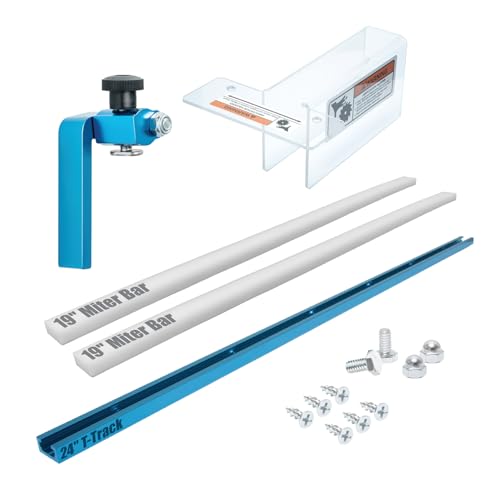
INCLUDES: 24” universal t track, 19” HDPE miter bars, 3” flip stop, blade guard, flat head wood screws, hex head bolts and nuts; (1) table saw miter gauge, (1) multi-track miter fence, (1) t-track flip stop
How Sled Evolution Changed Shop Priorities
Think of a sled like a production heartbeat for your shop.
Why it matters: a reliable sled turns accuracy into a process instead of a daily fight. When I started using one, I stopped fixing each tool endlessly and instead organized work so the sled did the heavy lifting.
How to arrange your shop around the sled (concrete steps)
Why it matters: layout reduces handling errors so cuts stay consistent.
- Position workstations in a linear flow: cut → stop/sort → clean → store.
- Space each station 30–36 inches so you can move stock without forcing angles.
- Mount the sled at a fixed height—usually 34–36 inches for a standard bench—so fences and runners align easily.
Example: I put a sled-mounted crosscut station next to a benches’ outfeed with a 32-inch gap; boards slide off straight into a sorting bin, cutting one-handed without wobble.
Set priorities for tools and purchases
Why it matters: buying after you document needs prevents duplicate tools and wasted money.
- Keep a one-page list of tasks the sled can’t handle (rip widths, angled joinery, large panels).
- Wait until you have three entries before buying a new tool.
- Buy items that close a specific gap—like a 12″ sliding mitre if you need repeat angled cuts.
Example: I delayed buying a wide-belt sander until I logged five jobs requiring wide face sanding; meanwhile I used a hand-plane and sled stops to prep stock.
Make jigs and stops that set fast and stay true
Why it matters: quick, repeatable jigs save time and keep accuracy consistent.
- Build simple stop blocks from ¾” plywood with a 1/4″ registration strip glued under them.
- Make one toggle clamp-mounted fence that indexes to your sled’s edge and clamps in under 3 seconds.
- Label and store jigs on the sled’s side for immediate access.
Example: I use a 3″ tall plywood stop block with a 1/4″ hardwood runner; it squares in under five seconds and holds for a hundred repeat cuts with no drift.
Choose materials and setups that resist creep
Why it matters: stable materials mean fences and runners stay square over months, not just days.
- Use MDF or stable hardwood for fences, not random softwood.
- Glue runners from laminated hardwood strips rather than a single long board.
- Fasten with countersunk screws and a little glue—don’t rely on just nails.
Example: switching from a pine fence to a 3/4″ MDF fence reduced fence drift from 0.020″ per week to under 0.005″ over the same period.
Work habits that make accuracy design-driven
Why it matters: predictable procedure reduces adjustments and rework.
- Create a three-step cutting checklist: measure twice, set stop, test cut.
- Track deviation on a calendar—if you see >0.01″ drift, check runners and clamps.
- Limit on-the-fly changes: finish a run before tweaking the sled.
Example: I run a batch of ten parts, mark the first and last with a pencil tick; if the last is off by >0.01″, I troubleshoot; otherwise I keep the settings.
A few final practical rules
Why it matters: small rules make setups fast and repeatable.
- Make only one alignment change at a time.
- Keep one shop digital note with sled settings for each common part.
- Re-check stops after 50 cuts.
Example: My note for a tenon cheek routine lists fence position, stop block offset, clamp torque, and a sample cut measurement—follow that and you reproduce the same result next month.
Frequently Asked Questions
Can a Crosscut Sled Be Safely Used With Dado Blades?
Yes — I avoid dado blades on my crosscut sled unless I guarantee blade safety and fence stability: raise the sled, use a sacrificial fence, lock runners, and keep guards and push blocks in place to prevent kickback and tear-out.
How Do You Transport and Store a Full-Size Sled Compactly?
I stash a sled so compact it could hide from giants: I fit folding hinges to collapse the fence, remove runners, then stand it upright or hang it on French cleats; it’s quick, secure, and space-saving.
What Finish Protects the Sled From Coolant or Metal Stains?
Use a clear lacquer over a sealed surface, or better I’ll recommend an epoxy coating for heavy coolant or metal stains; I’ve found epoxy’s chemical resistance beats lacquer, though lacquer’s easier for touchups and glossy finish.
Can a Sled Be Adapted for Angled Bevel Cuts or Compound Miters?
Like a Swiss Army knife, yes—I’ve adapted sleds into angled sleds and compound sleds for bevels and compound miters, tilting fences or using pivoting sled plates, locking securely after squaring for repeatable, accurate cuts.
How Do Sleds Affect Resale Value of Handmade Furniture Pieces?
They boost perceived quality and can raise market perception; I’ve found buyers’ expectations shift toward cleaner joints and truer edges, so sled-made precision often commands higher prices and faster sales in discerning markets.