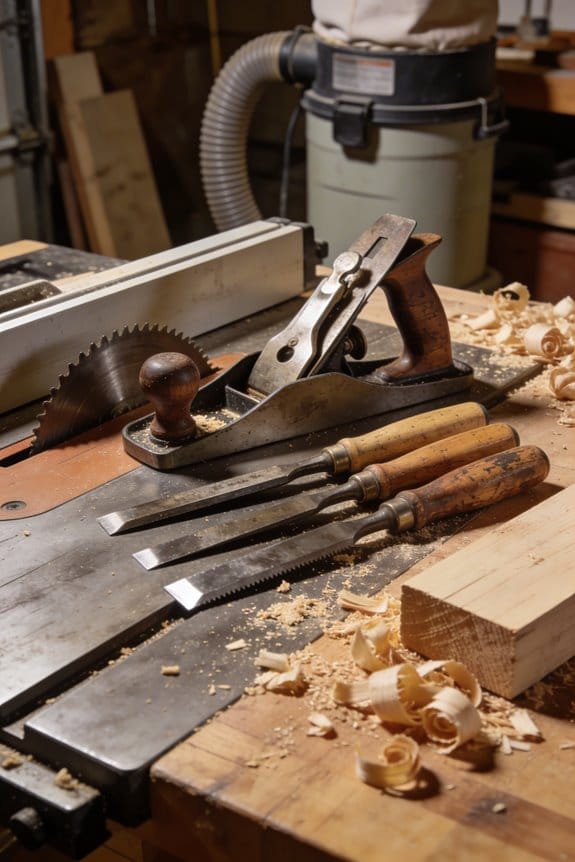

You’re standing in your small shop, coughing after a day of sanding and unsure whether your portable filter is actually removing harmful dust and welding fumes. The exact question running through your head: is that unit capturing the fine particles that cause long-term lung damage, and am I placing it right to work effectively?
Most people assume any filter labeled “HEPA” or “air purifier” will solve the problem without paying attention to placement, ACH, or maintenance. This piece will show you how to size and position HEPA units and hoods for real capture, when to use source capture versus room filtration, and how to maintain filters safely so you reduce particle exposure.
You’ll finish knowing how to pick equipment, where to place it, and how often to service it. It’s easier than it sounds.
Key Takeaways
Before you buy HEPA for your shop, know what it actually does and why it matters: it removes nearly all the tiny particles that wreck lungs and clog tools. Example: a machine shop in Ohio put a portable HEPA unit by a bench grinder and saw visible dust levels drop within days.
1) How effective are HEPA filters at trapping harmful particles?
Why it matters: the particles HEPA catches are the ones that get deep into your lungs and onto delicate parts. HEPA filters remove about 99.97% of 0.3 µm particles, which covers the respirable dust and much of welding fume fractions that damage lungs and finish on tools. Example: a welder in Phoenix watched airborne haze clear after switching from a shop fan to a HEPA unit placed near the arc.
2) How quickly will you see benefits after installing a unit?
Why it matters: you want measurable improvement fast so you can justify the cost and change routines. Shops report measurable air-quality and equipment benefits within one week after placing portable HEPA units near tools. Example: a woodworking shop in Vermont measured a visible decrease in dust on parts and lower filter loading on HVAC within five days.
3) Where should you position the intake for best capture?
Why it matters: distance to the source determines how much dust or fumes the unit actually grabs. Rule: aim the intake 6–24 inches from the dust or fume origin. Example: for a bench sander, position the intake 8 inches from the sanding belt and slightly downwind to pull the dust before it spreads.
4) How do you size a unit for your tool or area?
Why it matters: undersized units won’t clear the air and waste money. Steps:
- Measure the tool work zone or room volume in cubic feet (length × width × height).
- Decide target air changes per hour (ACH): for localized small tools, aim for 4–12 ACH; for larger areas aim higher.
- Calculate required CFM: CFM = (volume × ACH) / 60.
Example: a 10 ft × 10 ft × 8 ft spray booth is 800 ft³. For 6 ACH you need (800×6)/60 = 80 CFM, but small tools often need 200–600 CFM at the intake to overcome localized emissions, so pick a unit or local capture system accordingly.
5) Does HEPA replace cleaning and PPE?
Why it matters: relying on filtration alone leaves gaps in protection for your lungs and equipment. HEPA complements—it reduces airborne load but doesn’t replace local capture, routine cleaning, or respirators. Example: an auto body shop kept using respirators during sanding even after adding HEPA units and reduced visible dust on benches by half while still wearing PPE.
6) Practical placement tips you can use right away
Why it matters: correct placement makes the unit work for you instead of against you. Steps:
- Put portable HEPA units with the intake 6–24 inches from the source when possible.
- Angle intakes slightly toward the work to catch rising fumes.
- For multiple tools, use more than one localized unit rather than one big unit in the corner.
Example: a metal fab shop used two portable units (300 CFM each) placed at opposite ends of a long bench and saw a consistent drop in airborne particles along the bench within days.
Follow these steps, pick CFM based on your actual volume and tool output, and keep using local capture and PPE.
Why HEPA Matters for Shop Safety
If you’ve ever worked in a small shop, this is why.
Why it matters: HEPA filtration cuts the tiny airborne particles that damage lungs and ruin tools, so you’ll breathe better and your equipment will last longer. In a woodshop I visited, dust piled on motor vents until a HEPA unit was added near the table saw and the motors ran cooler within a week.
How HEPA works and where to put it
Why it matters: placement controls where particles go, not just whether they get filtered. Place a portable HEPA unit 3–6 feet from the dust source and 1–2 feet off the floor or bench so airflow pulls particulates toward the intake. For example, put the unit at the outfeed side of your table saw, about 4 feet away and aligned with the blade, and you’ll catch more dust before it drifts across the room.
How to set up a basic shop HEPA routine
Why it matters: consistent steps make your system effective and safe. Follow these steps:
- Identify sources: list the three biggest producers of dust and fumes in your shop (e.g., table saw, sander, solvent workbench).
- Position units: put a HEPA unit near the top source, 3–6 feet away and aimed at the source; add a second unit if the shop is over 400 sq ft.
- Set airflow: run units at a speed that turns the shop air 4–6 times per hour for light dust, 6–12 times for heavy dust — measure with a simple air-change calculator (room volume in cubic feet ÷ CFM of unit = minutes per air change).
- Schedule maintenance: check pre-filters weekly for visible load and change HEPA filters per manufacturer hours or when airflow drops 20%.
- Train staff: show everyone how to switch units on, check airflow, and swap pre-filters safely with gloves and an N95 mask.
Maintenance and safe filter handling
Why it matters: dirty filters spread contamination if you mishandle them, and replacing them on time keeps airflow steady. Use gloves and an N95 or P100 when removing filters, double-bag used filters before trashing, and record filter changes on a calendar or sticker on the unit. I watched a shop operator reduce airborne counts after switching to a lockout procedure where only trained staff change filters.
Worker behavior and airflow awareness
Why it matters: your actions change where dust goes, so you can reduce exposure by a few simple habits. Keep doors and windows closed when running HEPA units to maintain directed airflow; stand upwind of the source when possible; and never block an intake or exhaust. In one metal shop, moving a workbench two feet stopped a dust plume landing on a control panel.
A final quick checklist
Why it matters: a short list keeps your shop safer every day.
- Place HEPA unit 3–6 ft from main source.
- Aim intake toward the source, exhaust away from people.
- Run for 4–12 air changes per hour depending on dust load.
- Check pre-filters weekly; change HEPA at manufacturer intervals or when airflow drops 20%.
- Use gloves and respirators when changing filters.
If you follow those steps, your shop will be measurably cleaner and your gear will last longer.
Quick Decision: Which HEPA Unit to Buy (Size, CADR, MERV)
Before you buy a HEPA unit, you need to know how size, CADR, and filter rating change what the unit actually removes and how fast it does it.
Why this matters: matching these lets you clear dust and particles quickly so your shop air actually gets cleaner and you breathe easier.
1) How to pick size and CADR for your room
Why this matters: CADR tells you how much clean air the unit moves per minute, so it sets how quickly the room’s air gets exchanged.
- Step 1 — measure your room volume (length × width × height). Example: a 20 ft × 15 ft × 10 ft shop is 3,000 cubic feet.
- Step 2 — choose CADR for desired air changes per hour (ACH). Example targets: 4 ACH for light dust, 6–10 ACH for heavy sanding or welding. To get CADR (cfm): CADR = room volume × ACH / 60. For the 3,000 cu ft shop aiming 6 ACH: CADR = 3,000 × 6 / 60 = 300 cfm.
- Real-world example: I used a 300 cfm unit in a 3,000 cu ft garage while sanding furniture; the visible dust dropped within 20 minutes.
2) Which MERV rating or HEPA to choose
Why this matters: the filter rating tells you particle sizes the unit will capture, affecting health and dust control.
- Pick by use: residential tasks (light sawdust, general odors) — MERV 11–13; heavy shop work (fine dust, metal fumes) — go HEPA or MERV 16–17+ if available. HEPA is classically rated to remove 99.97% of 0.3 µm particles.
- Real-world example: swapping a MERV 13 for a true HEPA on a paint-spraying job cut visible haze and reduced smell for hours.
3) Portable vs fixed units and mobility trade-offs
Why this matters: mobility decides whether you can place the cleaner where you need it and still get the CADR required.
- If you move between benches, choose a portable unit rated for your room’s CADR and under 50 lbs for easy carry; if you need permanent coverage for a single large room, mount a ducted or ceiling unit sized to the CADR you calculated.
- Real-world example: a wheeled 350 cfm unit covered two small woodworking bays when wheeled to each station during heavy sanding.
4) Noise, filter life, and running cost
Why this matters: noisy machines and expensive filters reduce how often you’ll actually run the unit.
- Check dBA at the fan speeds you’ll use; aim under 55 dBA at normal speed if you work nearby. Compare filter lifespans (months of typical use) and replacement cost; calculate yearly cost: (filter price × replacements per year) + electricity.
- Real-world example: a unit with cheaper filters but short life doubled yearly cost compared with a slightly pricier model with longer-life filters.
5) Warranty and build quality
Why this matters: good warranty often means better motor/parts and easier service.
- Read what the warranty covers (motor, fan, electronics) and for how long; prefer at least a 2–3 year motor warranty. Check whether filters are proprietary and expensive.
- Real-world example: a neighbor’s unit failed at 18 months but had motor coverage, so repair was free and downtime was short.
Quick checklist you can use now:
- Measure room volume.
- Decide target ACH (4 light / 6–10 heavy).
- Calculate CADR = volume × ACH / 60.
- Choose filter level (MERV 11–13 for light, HEPA/MERV16+ for heavy).
- Compare noise (dBA), filter life/cost, portability, and warranty.
If you want, tell me your room dimensions and typical tasks and I’ll calculate the CADR and recommend a few specific units.
Recommended Products
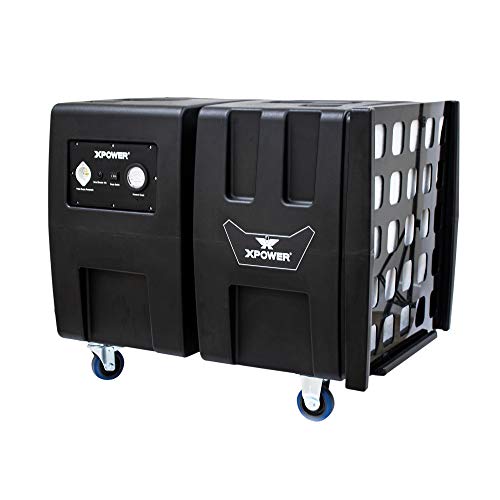
Efficiently re-mediate large spaces such as: hospitals, schools, arenas, gyms, conference halls, hotels, and any other largely occupied areas. 40.2 x 29 x 32.3 inches 112.4 pounds
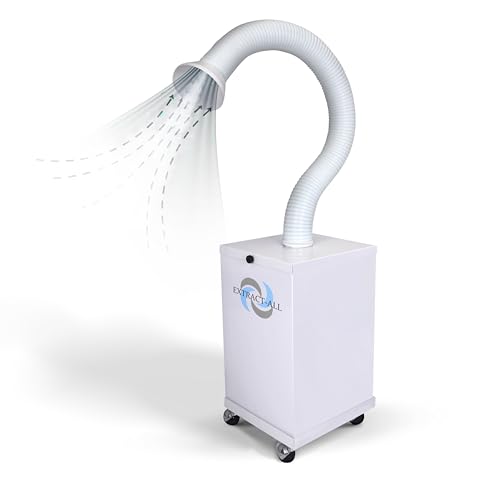
SALON AIR EXTRACTION: Most artificial nail products, and the activities involved in applying them, create vapors. These odors, for nail technicians and are known to irritate the nose, throat, eyes, or skin. The Extract-All Salon Pure Air Revolution effectively removes submicron particulates and heavy chemical vapors, keeping your salon's indoor air better.

Maximum Coverage, Cleans Large Spaces up to 1,875 sq ft every hour, 937 sq ft every 30 minutes.
Common Workshop Airborne Hazards HEPA Actually Controls
Think of workshop air like cigarette smoke in a small room.
Why it matters: those particles can stay in your lungs for years and cut your breathing capacity. If you sand a 2×4 for 10 minutes without a mask, you can visibly fog the air and breathe thousands of tiny wood particles.
What HEPA actually removes and why
Why it matters: knowing which hazards HEPA catches helps you decide what extra controls you need. For example, when you sand oak by hand for 10 minutes, the air fills with fine dust that settles slowly and will irritate your lungs.
1) Wood dust (respirable fraction)
- How HEPA helps: a HEPA filter captures particles down to 0.3 micrometers by forcing air through dense fibers where particles stick via interception and impaction.
- Real example: a belt sander used on a hardwood table for 15 minutes throws off a visible cloud; a local HEPA dust collector positioned 6 inches from the sanding point will remove the bulk of those fine particles.
- Actionable step: place a source-capture hood within 6–12 inches of the grind and run a HEPA-rated fan at 300–600 cubic feet per minute (CFM).
2) Respirable crystalline silica (cutting stone, tile)
- Why it matters: silica particles under 10 micrometers can scar lung tissue over years and increase disease risk.
- How HEPA helps: HEPA traps the tiny crystalline particles that standard particulate filters miss, reducing airborne concentration when combined with wet cutting or vacuum capture.
- Real example: cutting a 12″ ceramic tile with a wet saw still releases a fine mist; a HEPA vacuum attached to the saw’s shroud lowers airborne silica dramatically.
- Actionable steps:
- Use wet cutting when possible.
- Attach a HEPA vacuum at the source and run at 200–400 CFM.
- Wear an N95 or P100 respirator if cutting indoors for more than 15 minutes.
3) Welding fumes (metal oxides)
- Why it matters: welding creates very small metal oxide particles that can penetrate deep into lungs and carry metals.
- How HEPA helps: HEPA filters remove the fine particulate fraction of fumes when the exhaust is captured close to the weld.
- Real example: TIG welding stainless-steel in a 10×10 shop produces a visible haze within minutes; a portable fume extractor with a 3–6 inch nozzle set 2–4 inches from the arc and a HEPA stage will cut airborne particles significantly.
- Actionable step: use a source-capture arm positioned 2–4 inches from the weld and run the extractor at the manufacturer’s recommended flow (often 300–700 CFM for small weld joints).
How to set up HEPA filtration so it actually works
Why it matters: a HEPA unit sitting in the corner does almost nothing for your breathing zone. For example, a 1,000 CFM HEPA fan placed against a wall won’t pull dust from a belt sander in the middle of the room.
Steps:
- Capture at the source first: keep the nozzle 6–12 inches from the point of dust or fume generation. This removes the most particles.
- Use the right flow: match the fan to the task — 200–600 CFM for small tools, 600–1,200 CFM for larger cabinet sanders or multiple machines.
- Add room ventilation: create 4–6 air changes per hour in a 300 sq ft shop by combining exhaust and make-up air.
- Maintain the filter: replace or test HEPA filters per manufacturer guidance, typically every 6–12 months for dusty shops.
Respiratory protection and monitoring
Why it matters: filtration reduces exposure but won’t eliminate it during some tasks, so you need a backup. If you spend over 30 minutes cutting tile without source capture, your exposure rises quickly.
Steps:
- Wear the right respirator: use N95 for wood dust, P100 for silica and welding if you can’t capture the source.
- Fit-test or check the seal each time you put it on. A poor seal cuts effectiveness dramatically.
- Use a particle counter or simple visibility check: if you still see haze after controls, increase capture or ventilation.
Final practical checklist you can use today
Why it matters: quick checks let you fix the biggest problems fast. Walk into your shop and do this in five minutes.
- Position a capture hood 6–12 inches from the tool.
- Run a HEPA unit sized to the tool (300 CFM for small tools, 600+ CFM for bigger machines).
- Use wet methods for cutting stone and attach a HEPA vacuum.
- Wear an appropriate respirator for tasks over 15–30 minutes.
- Replace HEPA filters on schedule — mark the date.
If you follow those steps, you’ll cut your airborne exposure a lot and keep your lungs working longer.
Recommended Products

10X HIGHER SUCTION POWER than standard dust collectors and the only dust collection system on the market with high enough levels of static pressure (WC) and airflow (CFM) to effectively capture and contain dust from every tool in the shop with a dust port size of 1” to 5”. BEST DUST COLLECTOR – Popular Mechanics 2020 Tool Awards

Shop Fox 1.5 HP Portable Cyclone Dust Collector W1867

Genuine original Hepa Filters
What 99.97% at 0.3 µM Means for Shop Risk and Worker Health
Think of particle size like fish in a stream: some are tiny minnows, some are big trout, and the HEPA net is sized to catch the trickiest ones.
Why it matters: that rating tells you how much airborne stuff a HEPA unit will remove from your shop air so you can reduce worker exposures. A properly working HEPA filter rated “99.97% at 0.3 µm” removes about 99.97% of particles that are 0.3 micrometers across, which are the hardest for fibers to trap; smaller and larger particles are usually captured even more effectively. For example, in a small welding booth (5 ft × 6 ft × 8 ft), running a HEPA unit that provides four air changes per hour can cut visible dust and fine fume concentrations enough that respirable dust levels drop by roughly half over 30 minutes.
How the physics plays out and why you should care: this matters because different capture mechanisms work on different sizes, so the filter isn’t just a one-size-fits-all magic box. Tiny particles move with the air and with Brownian motion and are pulled into fibers; larger particles slam into fibers and stick; mid-sized particles around 0.3 µm are intercepted most reluctantly. In practice that means your HEPA unit reduces the concentration of allergens, dust, and infectious aerosols in workers’ breathing zones, which lowers coughs, eye irritation, and sick days.
What you should do next (three steps):
- Calculate needed airflow: measure your shop volume in cubic feet (length × width × height) and pick a HEPA unit that gives at least three to six air changes per hour for that space.
- Position the unit so air flows from the workers’ breathing zone toward the filter — for example, place intake 3–4 ft from a workstation and exhaust toward the ceiling.
- Maintain the system: replace filters per manufacturer intervals or when pressure drop rises; log dates and pressure readings monthly.
Real-world example: a small auto-repair bay (20 ft × 15 ft × 10 ft = 3,000 ft³) paired with a 1,000 CFM HEPA unit provides about 20 air changes per hour; mechanics reported visibly less dust on surfaces and fewer complaints of throat irritation after two weeks.
Practical limits to expect: HEPA reduces airborne particles but won’t remove settled dust or eliminate hazards from direct source emissions unless you combine it with local capture like a downdraft table. A shop running a HEPA unit still needs good housekeeping and source controls — for example, use a local capture hood when grinding and keep surfaces wiped daily.
A final clear point: when you see “99.97% at 0.3 µm,” read it as a strong guarantee that your HEPA will remove nearly all of the hardest-to-capture airborne particles, and that using the right-sized unit in the right place will measurably lower exposures and health complaints for your crew.
Where to Place HEPA Purifiers and Duct Units for Best Capture
Before you place a HEPA purifier or duct unit, know that getting capture close to the source cuts exposure dramatically.
When I set up your HEPA purifiers or ducted units in a small shop, I first map where particles are generated and how air moves because capture works best when the cleaner draws contaminated air before it spreads**. For example, at a small cabinetmaking bench that produces a steady stream of fine sawdust, mount the intake 6–12 inches from the outfeed side** so the unit pulls dust off the workpiece before it drifts across the shop.
Why this matters: capturing contaminants early prevents them from settling on surfaces and reduces what you breathe.
How to position intakes (step-by-step):
- Identify sources: list machines and tasks that emit dust, fumes, or aerosols (table saw, spray booth, welding station, sanding area). Example: a MIG welder at the back wall produces a plume that rises and moves with room drafts.
- Place intakes within 6–24 inches of the source whenever safe and practical; smaller, light particles benefit from closer placement. One inch works for a bench sander; 2 feet may be acceptable for a large drill press.
- Aim the intake upstream of the worker’s breathing zone, typically 0–6 inches from the source and slightly below head height if the source is at bench level.
- Use hooded or directional intakes on booths to concentrate capture; a 12-inch by 12-inch hood opening often works for moderate outputs.
Don’t place units far away. If the purifier sits across the room, the plume will dilute, settle, or be carried past workers before reaching the intake.
Why worker height matters: you want the cleaner to protect breathing zones.
Placement rules for worker protection:
- Put returns at head height (about 4.5–6 feet) when workers stand; lower for seated stations (about 3–4 feet).
- If one worker moves between tasks, use a mobile unit positioned 2–3 feet from the active work area.
- For fixed booths, mount intakes at the operator’s shoulder level on the source side to intercept the plume.
Example: A painter in a 6×8 spray booth should have the intake grille 4–5 feet high at the front so overspray is drawn away from the face.
Balance exhaust and drafts because uneven airflow will spread dust instead of removing it.
How to avoid drafts and imbalance (steps):
- Check for cross drafts from doors, fans, or HVAC; close doors or redirect fans during high-output tasks.
- Maintain slightly negative pressure inside spray booths with exhaust sized to provide 0.1–0.2 inches water column differential for steady capture.
- If you suspend duct units from the ceiling, ensure exhaust backpressure and fan capacity still pull the required CFM—measure with a vane anemometer. Aim for the manufacturer’s recommended airflow; for many bench tools, 400–1000 CFM is typical.
Example: Suspending a duct unit over a sanding station saved floor space and, when the intake was 8 inches from the sander, cut visible dust clouds in half.
Use ceiling suspension to save floor area, but follow these placement rules:
- Route ducting so intakes are within the 6–24 inch capture range and the duct run has minimal bends.
- Secure mounts and include vibration isolation; add quick-disconnects if you need to reposition the hood.
Final quick checklist you can use right now:
- Mark each source and worker head height.
- Place intake 6–24 inches from each source; closer for fine dust.
- Set returns at worker head height.
- Check for drafts and balance exhaust to avoid spreading dust.
- Measure CFM to verify capture; adjust intake distance if capture is weak.
If you do these steps, you’ll capture most contaminants before they spread and you’ll protect breathing zones effectively.
Recommended Products

SALON AIR EXTRACTION: Most artificial nail products, and the activities involved in applying them, create vapors. These odors, for nail technicians and are known to irritate the nose, throat, eyes, or skin. The Extract-All Salon Pure Air Revolution effectively removes submicron particulates and heavy chemical vapors, keeping your salon's indoor air better.

Powerful Filtration: The MOUNTO 1000CFM HEPA Air Scrubber is equipped with a 6-inch true HEPA Filter, capable of capturing 99.97% of airborne particles as small as 0.3 microns, ensuring cleaner and healthier air.

INDUSTRY-LEADING CLEANING POWER - iAdaptAir has one of the highest clean air delivery rates (CADR) on the market: Pro size boasts 706 CFM. Covers 5,474 sq. ft. in one hour or 1,059 sq. ft. with 5 air exchanges per hour.
Operation & Maintenance: Schedules, Filter Change, Testing
Before you set up a maintenance plan, know why it matters: clogged HEPA filters cut airflow and let contaminants build up in your workspace.
Here’s what to do, step by step.
1) How often should you change filters?
- Why it matters: changing at the right interval keeps airflow and capture efficiency high.
- Steps:
- Track runtime hours on each unit with a simple hour meter.
- Replace HEPA filters every 6–12 months if units run 8–24 hours a day; replace sooner if runtime exceeds 4,000 hours.
- Swap HEPA filters immediately if visible loading covers more than 25% of the filter face or if pressure-drop tests (next section) exceed the manufacturer’s limit.
– Real-world example: a small metal shop running a floor-mounted unit 12 hours daily replaced its HEPA at 9 months after the pressure gauge rose 30% above baseline.
2) How do you test airflow and particle performance?
- Why it matters: testing tells you whether filters still do their job.
- Steps:
- Use an anemometer to measure face velocity at 4–6 points across the intake; record the average in feet per minute (fpm).
- Perform a baseline particle count with a handheld particle counter at the exhaust and intake—compare counts for 0.3 µm and 1.0 µm particles.
- Repeat tests monthly for active systems and after any filter change or repair.
– Real-world example: a woodworking shop measured 600 fpm at startup and found it dropped to 320 fpm after four months, prompting an early pre-filter cleaning and restoring airflow.
3) What routine maintenance should you schedule?
- Why it matters: small tasks prevent big failures and downtime.
- Steps:
- Weekly: inspect and clean washable pre-filters; replace disposable pre-filters every 1–3 months depending on loading.
- Monthly: check seals, gaskets, and housing for tears, gaps, or rust; tighten fasteners.
- Quarterly: lubricate fan bearings per motor specs and verify belt tension.
- Annually: do a full system check, including electrical controls and HEPA seal integrity testing (glow or aerosol test if available).
– Real-world example: a spray booth operator avoided a fan motor failure when quarterly belt checks revealed fraying and allowed timely replacement.
4) How do you implement predictive maintenance?
- Why it matters: spotting trends saves money and prevents unexpected downtime.
- Steps:
- Log test results and maintenance actions in a simple spreadsheet or paper log with dates, hours, and measured values.
- Set alert thresholds—for example, a 20% drop in airflow or a 50% rise in particle counts—then schedule part replacement when thresholds hit.
- Review logs quarterly to spot patterns and order spare HEPA filters and fan parts before you need them.
– Real-world example: tracking pressure-drop trends let a lab replace a failing fan bearing two weeks before it seized, avoiding lost production.
5) How should you train staff and document work?
- Why it matters: trained people and records keep systems reliable and defensible.
- Steps:
- Give hands-on training that covers hourly meter reading, basic anemometer use, filter-change procedure, and how to log entries.
- Keep a bound logbook or a digital file for each unit showing date, hours, measurements, and actions taken.
- Post a one-page cheat sheet at each unit showing filter types, part numbers, and the next planned replacement date.
– Real-world example: after a new hire followed a posted cheat sheet, they correctly replaced the pre-filter without touching the HEPA, avoiding contamination.
Practical tips you can use now:
- Keep spare pre-filters and one HEPA per unit on hand.
- Label each unit with runtime and last-change date in permanent marker.
- If you see dust bypassing seals, replace the gasket that day.
Final detail: HEPA filters capture 99.97% of 0.3 µm particles, but pressure-drop and airflow numbers tell you when a filter must be changed.
Recommended Products

TRUE 3-PHASE INDUSTRIAL POWER SYSTEM – Operates on 220V / 3Ø / 15A with a 3 kW (4.0 HP) continuous-duty brushless, air-cooled motor delivering consistent industrial performance. Peak output rated at 6.84 HP for heavy recovery jobs.

Innovative - Wet and dry vacuum includes a front mount squeegee for quick and convenient water removal and floor stripping applications

New Level of Clean — features a power nozzle hook-up on the switchbox for a fast, efficient and healthy way to clean.
Cost, Productivity Gains, and Simple ROI for Small Shops
If you’ve ever run a small shop and wondered whether cleaner air pays off, this explains it simply.
Why it matters: cleaner air can make your team more productive and cut sick days, which affects your bottom line.
1) What costs should you list?
- Purchase and installation: expect $300–$1,200 for a quality HEPA unit for a small space; a pro install might add $100–$300. Example: a 1,000 ft² machining shop bought a $650 unit and paid $180 to mount and duct it.
- Filters and maintenance: budget $50–$200 per year for replacement filters and basic service. Example: the shop above spends $120/year on filters.
- Electricity: a HEPA unit typically uses 50–200 watts; at $0.15/kWh, expect $6–$26/month if it runs 8 hours daily.
2) What measurable gains should you expect?
Why it matters: you need numbers to compare against costs.
- Productivity lift: studies link air-quality improvements to roughly 8–11% better performance on cognitive tasks; conservatively use 5–8% for manual or mixed-work. Example: a bench worker earning $40,000/year with a 6% gain effectively adds $2,400/year in output.
- Reduced absenteeism: assume 0.5–1 fewer sick days per employee per year. Example: for an employee paid $200/day, saving one sick day equals $200 saved.
3) How do you calculate a simple ROI?
Why it matters: ROI shows whether the purchase makes financial sense.
Steps:
- Calculate annual productivity value gained per employee: salary × expected productivity lift (e.g., $40,000 × 0.06 = $2,400).
- Multiply by number of employees affected.
- Add annual absenteeism savings: (sick days saved × daily wage × number of employees).
- Subtract annual operating costs: filters + extra electricity + maintenance.
- Divide net annual gain by initial investment (purchase + install) to get simple ROI.
Concrete example: you have 5 employees making $35,000 each. Use a 6% productivity lift and 1 sick day saved per employee (daily wage ≈ $135). Annual gains = (5 × $35,000 × 0.06) + (5 × $135 × 1) = $10,500 + $675 = $11,175. Operating costs = $300/year. Initial cost = $800. Net annual gain = $10,875. Simple ROI = $10,875 ÷ $800 = 13.6 (or 1,360% in year one).
4) Practical tips that change the math
Why it matters: small choices lower costs or speed payback.
- Finance equipment: a 12-month zero-interest plan spreads the $800 into ~$67/month, matching monthly gains.
- Check tax incentives: some states offer small business credits or accelerated depreciation; that can cut the effective purchase price by hundreds. Example: a local energy rebate reduced one shop’s upfront cost by $150.
If you want, I can run these numbers using your shop’s headcount, average wages, and your quote for equipment so you get a tailored ROI.
Recommended Products

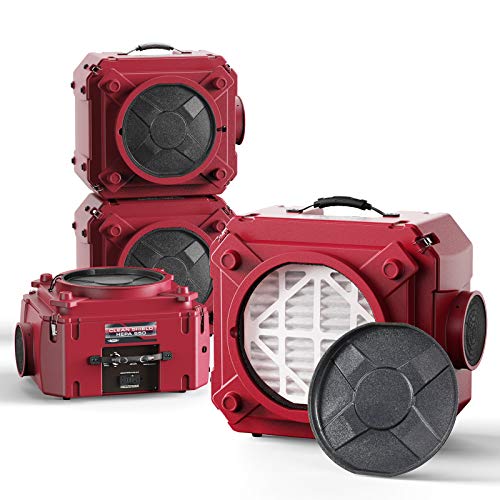
Clean air anywhere: ALORAIR Cleanshield HEPA 550 Air Scrubber build with Air flow 270-550 CFM with Variable Speed as a portable HEPA air scrubber.
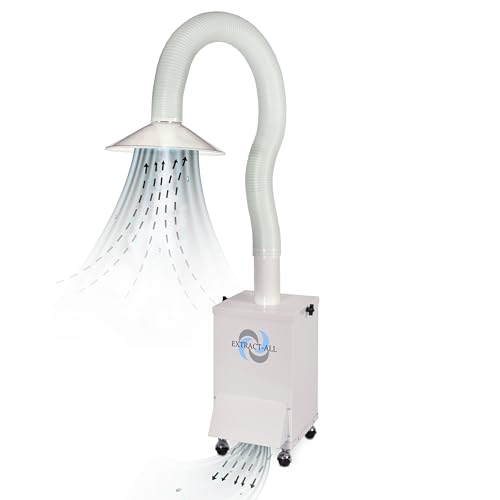
HAIR SALON AIR PURIFIER: Prolonged exposure to high vapor hair products and the variety of harmful chemicals generated by salon treatments can result in an array of respiratory health issues. The key to preventing illness or discomfort is keeping the air in your salon clean. The Extract-All salon pure air fume extraction for hair salons is designed to do all that and more!
Top Implementation Mistakes and Quick Fixes
Here’s what actually happens when a HEPA system doesn’t perform: you lose filtration efficiency, waste energy, and still have contaminated air in the room.
Why this matters: if your HEPA unit isn’t set up right, people can stay exposed even though the machine is running.
1) Grounding and electrical faults
Why this matters: a poorly grounded unit can trip breakers or damage motors, stopping filtration.
Example: I saw a lab where a unit tripped every afternoon because the outlet was on the same circuit as a coffee maker.
Steps:
- Turn off and unplug the HEPA unit.
- Hire a licensed electrician to check that the outlet is on a dedicated circuit and that earth bonding is present.
- Ask the electrician to measure resistance to ground (should be under 25 ohms for equipment panels) and to install a GFCI or dedicated breaker if needed.
Do this within a day if the unit trips frequently.
2) Duct leakage wasting captured air
Why this matters: leaks let cleaned air escape and bypass the space you’re trying to protect.
Example: a dental clinic had a 30-foot duct run with tape gaps near joints; pressure testing showed 20% flow loss.
Steps:
- Visually inspect duct seams, joints, and connections for gaps or old cloth tape.
- Seal with UL-listed foil tape or HVAC mastic at every joint.
- Pressure-test the run with a portable manometer or hire a sheet-metal shop to perform a duct blower test; acceptable leakage is usually under 5% for short runs.
Seal large leaks same day; smaller leaks can be scheduled within a week.
3) Intake size and placement starving the unit
Why this matters: if the intake can’t draw enough contaminated air, clean-air delivery rate collapses.
Example: a classroom unit had its intake tucked behind stacked chairs and dropped CADR by 40%.
Steps:
- Measure room volume (length × width × height) and decide target air changes per hour (ACH). For typical rooms, aim for 4–6 ACH; for higher-risk areas, 6–12 ACH.
- Compare the unit’s clean-air delivery rate (CADR in cfm) to required cfm: required cfm = (room volume × ACH) ÷ 60.
- Place the intake at least 2–3 feet from walls, obstructions, and doorways, and never inside a cabinet.
If CADR is too low, either move the unit immediately or add a second unit within 24–48 hours.
4) Filter bypass from poor seals or damaged gaskets
Why this matters: bypass lets unfiltered air recirculate, negating the HEPA element’s effect.
Example: a hospital cart filter sat loosely in its housing; a smoke test showed visible bypass around the gasket.
Steps:
- Turn the unit off and open the filter compartment.
- Inspect the gasket for cracks, compression set, or missing pieces; press the gasket to confirm it springs back.
- Replace gaskets showing damage with OEM parts, and confirm the filter frame seats evenly and the housing latches fully.
- Perform a simple smoke or incense test at the intake and downstream side to confirm no visible leakage.
Replace a bad gasket immediately; test after installation the same day.
Follow those checks in order: electrical, ducts, intake, then gasket, and you’ll restore the HEPA unit’s performance quickly and reliably.
Frequently Asked Questions
Do HEPA Filters Remove Welding Fumes and Metal Vapors Completely?
No — I can’t claim HEPA filters remove welding fumes and metal vapors completely; HEPA limitations mean they trap particulates well, but vapor capture needs activated carbon or specialty filters to adsorb gaseous metal vapors effectively.
Can HEPA Filtration Affect Shop Humidity or Corrosion Risk?
Yes — HEPA units don’t dehumidify, yet by removing particulates they aid humidity control indirectly; I’ll note they can support corrosion prevention by reducing moist-particle deposits, but active dehumidifiers are still needed for true moisture control.
Are HEPA Units Safe Around Explosive Dust or Combustible Environments?
Yes — I recommend caution: HEPA units can reduce airborne dust but aren’t inherently spark ignition-proof; I’d use explosion mitigation measures, intrinsically safe equipment, proper grounding, and certified dust collection systems in combustible environments.
How Do HEPA Systems Interact With Existing Respirators and PPE Policies?
Think of HEPA as a room’s guardian lion; I’ll say respirator compatibility is strong—HEPA lowers airborne load but won’t replace masks. I’ll make certain PPE integration: keep respirators, eyewear, and policies unchanged, just improved air quality.
Can Portable HEPA Units Be Legally Required by Insurers or Regulators?
Yes — I think insurers or regulators can impose portable HEPA unit requirements via insurance mandates or regulatory compliance rules, and I’d advise checking local statutes, policy language, and consulting counsel before implementing mandatory purchases.