You walk into your shop mid-morning and notice a heavy, stale smell and a slight headache creeping in — you wonder why the space feels oppressive even though it seems “clean.” You ask whether the issue is poor cleaning, a hidden spill, or just too many people breathing the air.
Most people assume surface cleaning or opening a door fixes indoor air problems, but that misses how ventilation, particles, and VOCs behave. This piece will show you practical, low-effort steps to make the shop feel noticeably fresher: how to reduce CO2 for alert staff, cut particles to remove dust and odors, and neutralize VOCs so chemical smells stop.
You’ll get specific actions—what to change, where to place filters, and what to monitor—so customers and staff feel better day to day. It’s easier than you think.
Key Takeaways
Think of a shop’s air like the background music — it changes how everything feels.
Why cleaner air matters: if your shop smells fresh and surfaces stay dust-free, customers hang around longer and staff feel better. A bakery I know went from customers wiping counters to compliments after installing a decent filter; sales rose on busy mornings.
How cleaner air reduces odors and dust
Why this matters: fewer smells and visible dust make your space feel newer and more welcoming.
1) Install a MERV 13 or higher filter in your HVAC or use a HEPA portable unit sized for the room (look for CADR that matches your square footage).
2) Vacuum with a HEPA vacuum twice a day in high-traffic zones; mop hard floors once daily.
Example: a small coffee shop replaced its cheap filter with a HEPA unit and cut visible dust by half in two weeks.
Lower CO2 and better ventilation make people alert
Why this matters: lower CO2 helps customers think clearly and staff stay focused.
1) Aim for indoor CO2 under 800 ppm — add fresh-air intake or open a door for 5–10 minutes every hour during slow periods.
2) Use a $100 CO2 monitor so you can see levels and act.
Example: a boutique used a monitor and began airing out between appointments; staff reported fewer afternoon slumps.
Consistent airflow and temperature control prevent stale spots and drafts
Why this matters: steady airflow keeps every corner comfortable so people don’t cluster or complain.
1) Balance vents: set supply airflow so each zone gets similar cubic feet per minute (CFM); an HVAC tech can measure this.
2) Keep thermostat swings within ±2°F during business hours.
Example: a bookshop adjusted vent dampers and eliminated a cold draft near the window seat.
Effective filtration cuts visible particles for a calmer look
Why this matters: removing particles makes surfaces and air look cleaner, which relaxes customers.
1) Use filters rated MERV 13+ or a portable HEPA machine sized to the room’s square feet; change pre-filters monthly.
2) Position portable units where people congregate, not hidden in corners.
Example: a salon added a HEPA unit by the waiting area and clients noticed clearer air and fewer hair particles on surfaces.
Monitoring and timely filter changes keep air quality steady
Why this matters: steady air quality builds customer trust and keeps staff morale up.
1) Set a filter-change schedule: check filters every 30 days, replace every 90 days or sooner if visibly dirty.
2) Log readings from an indoor air quality monitor (CO2/PM2.5) weekly so you spot trends.
Example: a small restaurant kept a 12-week filter log and cut complaints about smells during weekend rushes.
Final practical checklist (do this this week)
- Buy a CO2 monitor and place it near seating.
- Replace or upgrade filters to MERV 13 or HEPA where possible.
- Run a portable HEPA unit sized for your busiest room.
- Vacuum with HEPA twice daily and mop once daily.
- Log filters and monitor readings every week.
If you follow those steps, your shop will feel cleaner and more comfortable, and you’ll see fewer complaints and more relaxed customers.
Quick Summary: Immediate Steps to Improve Retail Air Quality
If you’ve ever worked a long shift in a stuffy shop, this is why. Improving your store’s air matters because it reduces customer complaints, keeps employees healthier, and cuts sick days.
1) What quick ventilation changes should you make right away?
Why it matters: fresh air cuts down on odors and particles that make breathing harder.
Steps:
1. Open doors or windows for 10–15 minutes every two hours when outdoor air is under 55°F or under 75°F and not smoky; do this at opening and mid-shift.
Example: At a small bakery, staff open the back loading door for 15 minutes at 9:30 a.m. and 2:30 p.m., clearing flour dust and steam.
2. Use fans to create cross-ventilation: place one window fan blowing out and another pulling air in, each set to low or medium.
3. Increase HVAC fresh-air intake by 20–30% if your system controls allow; ask your technician for the exact damper setting.
Finish with a check: feel for a slight breeze near the front counter during a 15-minute test.
2) Which filters and filter practices give the biggest improvement?
Why it matters: better filters remove more particles and reduce respiratory irritation.
Steps:
1. Upgrade to MERV 13 filters if your HVAC fan motor supports them; keep MERV 8 if your system can’t handle higher resistance.
Example: A boutique swapped from MERV 8 to MERV 13 after confirming with their HVAC company; dust on shelves dropped noticeably within a week.
2. Replace filters every 60–90 days for MERV 13 under normal conditions, or every 30–45 days if you see visible dust or high customer traffic.
3. Keep a simple calendar or sticker on the unit noting the install date and next replacement date.
End with a measurement: inspect the filter visually—if you can’t see light through it, replace it.
3) How do you stop outdoor smells and pollen from getting inside?
Why it matters: sealing gaps lowers odor, allergens, and energy loss.
Steps:
1. Seal visible gaps around doors and windows with door sweeps and foam weatherstripping—use 3/4″ sweep for exterior doors.
Example: A florist installed a 3/4″ door sweep and foam around a front window before spring; staff reported fewer allergy reactions during opening hours.
2. Close loading dock seals when not in use and use vestibules if you have them.
3. Check and tighten seals quarterly, especially before pollen season.
End with a measurement: press your hand near door edges while someone outside puffs a small amount of baby powder; if you feel air, reseal.
4) What seasonal HVAC checks should you schedule?
Why it matters: seasonal tuning prevents problems when your store is busiest.
Steps:
- Spring: check filters, clean coils, and confirm outside intake dampers open before pollen season.
- Summer: test cooling capacity and increase fan runtime by 1–2 hours during and after peak hours.
- Winter: raise air changes by 10–20% on cold days when doors stay closed and balance humidity to 40–50%.
Example: A clothing store bumps fan runtime by 90 minutes in summer and reduced post-closing humidity-related smell within days.
Finish with a quick test: look at supply vents—air should feel steady without whistling.
5) How do you train staff so systems actually work?
Why it matters: trained staff keep systems running and catch issues early.
Steps:
- Teach three tasks: how to operate vents/dampers, how to check and change filters, and how to log complaints or equipment noises.
- Run a 15-minute demo once a month and add a one-page checklist at the HVAC unit.
- Assign one person as the monthly air-quality lead and rotate annually.
Example: A small grocer trained all cashiers on the checklist; within two months they fixed a noisy fan before it failed.
End with a proof: ask the lead to show you the last replacement sticker and complaint log.
6) How should you monitor and document improvements?
Why it matters: monitoring proves changes work and guides next steps.
Steps:
- Use three simple checks: visual filter inspection, airflow feel at vents, and weekly staff feedback notes.
- Log results in a single spreadsheet: date, filter condition, airflow (good/fair/poor), staff comments.
- If you want numbers, add a basic CO2 monitor near the sales floor; aim for CO2 under 800 ppm during business hours.
Example: A cafe tracked filter checks and CO2 for two months and reduced average CO2 from 1,100 ppm to 700 ppm after upping fresh air intake.
End with a record: keep at least six months of entries to spot trends.
You can do most of this in a weekend and keep things running with 10–15 minutes of staff checks per week.
Which Indoor Pollutants Hurt Retail Atmosphere Most?

If you’ve ever walked into a shop and felt like the air was doing you a favor by leaving, this is why.
Fine particles matter because they irritate eyes and lungs and make spaces feel dusty and tiring. Example: a clothing boutique next to a busy street had visible dust on shelves within hours because its HVAC filter was a cheap MERV 4, not a MERV 8; swapping filters cut visible dust in half within a week. How to fix it:
- Check your filter rating; aim for MERV 8–13 depending on your HVAC system.
- Replace filters every 3 months, or monthly if you see dust buildup.
- Use a portable HEPA unit in high-traffic zones sized for the room’s square footage.
Volatile organic compounds (VOCs) matter because they make customers notice odors and can cause headaches. Example: a café painted in cheap latex smelled for days and customers complained until the owner aired it out and switched cleaners. How to fix it:
- Buy low-VOC paints and cleaning products labeled <50 g/L.
- Store solvents and supplies in sealed cabinets away from customer areas.
- Ventilate for at least 48–72 hours after painting or heavy cleaning by running fans and opening doors.
Formaldehyde matters because even low levels can irritate people and lower perceived cleanliness. Example: a new shoe store using pressed-wood display racks gave visitors a faint chemical smell; replacing racks with solid wood or laminated MDF reduced complaints. How to fix it:
- Choose materials labeled low-formaldehyde or CARB-compliant.
- Test areas where pressed wood is used with a low-cost formaldehyde meter.
- Increase ventilation and place air-purifying plants or units near displays.
Ozone and nitrogen dioxide matter because they worsen indoor air quality and can come from equipment or appliances. Example: a dry-cleaner’s pickup point had ozone smell after new air cleaners were installed; switching to units that don’t produce ozone removed the odor. How to fix it:
- Avoid air cleaners that produce ozone; check specs before buying.
- Service gas appliances annually to cut NO2 emissions.
- Use CO and NO2 detectors in backrooms with gas use.
You should measure levels because staff face prolonged exposure and problems compound over time. Example: a staff member in a small electronics shop developed persistent eye irritation until the owner measured PM2.5 and VOCs and adjusted ventilation. How to do it:
- Buy or rent handheld PM2.5 and VOC meters.
- Log readings weekly and after events like deliveries or renovations.
- Prioritize fixes where readings exceed common guidelines (e.g., PM2.5 over 35 µg/m3).
Quick checklist you can use today:
- Swap to MERV 8–13 filters and note replacement dates.
- Switch to low-VOC paints/cleaners and store chemicals sealed.
- Test for formaldehyde where pressed wood is used.
- Avoid ozone-producing air cleaners and service gas appliances.
- Monitor PM2.5 and VOCs weekly with a handheld meter.
If you handle these items, your shop will feel cleaner and customers will notice.
Recommended Products

A leading provider of ventilation and air-quality solutions for homes

100-PINT WHOLE HOUSE DEHUMIDIFIER – Removes up to 100 pints of moisture per day to help maintain a healthier home. Ideal for basement dehumidifier or crawl space dehumidifier or whole-home HVAC—helps prevent mold, musty odors, and wood damage

DEHUMIDIFERS FOR HOME: Removes up to 70 pints of moisture per day to help maintain a healthier, more comfortable home. This AprilAire Whole-House Dehumidifier is ideal for basements, crawl spaces, or ducted to HVAC—prevents mold, odors, and wood damage.
Five Low-Cost Actions to Improve Air Today

Here’s what actually happens when outdoor air sneaks in through gaps: it brings dust, pollen, and vehicle exhaust straight into your shop, raising particle counts and making breathing worse. Seal gaps around doors and windows; install a 1/4-inch compressible door sweep and apply weatherstripping tape around frames, pressing it firmly every 6 inches. Example: when I added a swept door to my garage, dust on the bench dropped noticeably within a week.
If you’ve ever opened a can and then smelled it for hours, this is why source control matters: volatile chemicals evaporate and linger, raising VOC levels that can cause headaches. Choose low-VOC paints and glues (look for labels like “VOC <50 g/L”) and store solvents in metal cabinets with tight latches; place absorbent spill trays under small bottles. Steps: 1) Replace high-VOC items when they run out. 2) Label and seal current containers. 3) Keep a small sealed bin for waste solvents.
Think of cleaning like removing the seed from a dandelion — disturb it and it spreads. Clean floors and work surfaces weekly with a HEPA vacuum and a damp mop to stop settled dust from resuspending into the air. Example: a printer mechanic I know switched to weekly HEPA-vacuuming and cut airborne particle spikes after each shift by half.
Before you place plants, you need to know some release small amounts of VOCs themselves, so pick wisely and place them for function, not decoration. Use 6–10 medium pots of non-emitting species such as spider plants or snake plants in a 200–400 sq ft room, and keep them grouped near humidifiers or work areas to help particulate settling. Example: a small woodshop added four snake plants near the finishing table and saw a slight drop in settled dust on nearby surfaces after two months.
You don’t need an expensive monitor if you want to catch problems early; a basic particle counter or VOC sensor under $150 can flag trends. Put the sensor at breathing height (3–5 feet) near your workbench and check it at the same time every day for one week to establish a baseline. Steps: 1) Buy a consumer particle/VOC monitor. 2) Mount it on a shelf at 3–5 ft. 3) Log readings twice daily for seven days to see patterns.
Recommended Products

Nice Combination: the package includes 4 pieces of door sweeps, and each door sweep is equipped with 4 self tapping screws, enough to meet your daily needs and can be shared with your friends
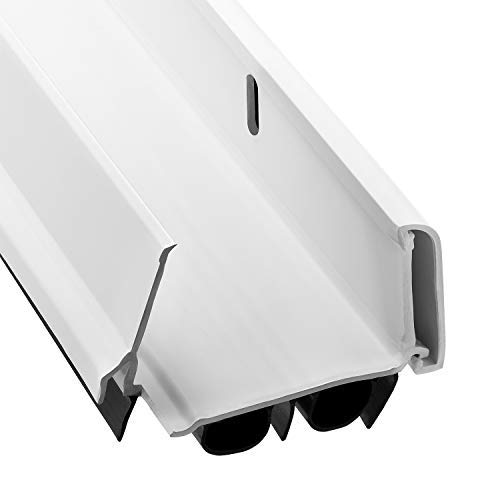
Best sealing sweep – compatible with most thresholds

Package Including: you will receive 2 U shape slide on under door seals, made of quality aluminum and rubber, forms a reliable barrier against weather, dust, and drafts with its tight seal; This product effectively guards against unwanted outdoor elements, providing homes with cleaner and cozier interiors
Ventilation & Filtration: What to Choose for Comfort and Lower VOCs
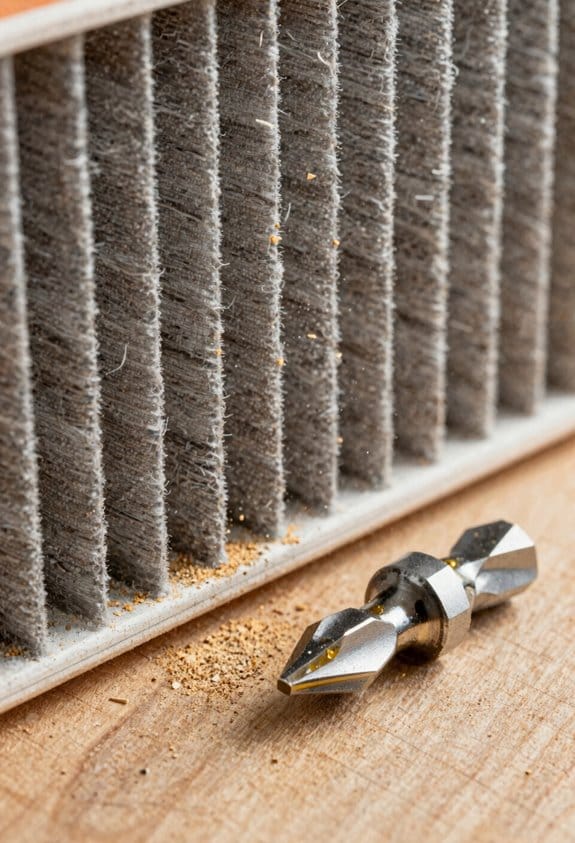
Here’s what actually happens when you bring fresh air into a shop: it dilutes CO2 and many VOCs but only if the air is filtered and balanced.
Why this matters: you’ll keep customers comfortable and lower VOC exposure while avoiding drafts that chase people out. For example, a small woodworking shop that switched to filtered intake cut noticeable solvent smell during busy afternoons and kept people from clustering near the door.
1) What ventilation should you pick?
Why this matters: the right ventilation controls CO2 and lets you dial up airflow during busy times.
Steps:
- Choose mechanically driven supply ventilation (not just open doors).
- Size it for 4–8 air changes per hour (ACH) for a typical small shop; aim for 6 ACH if you have heavy chemical use.
- Use a variable-speed fan so you can run it at low speed when alone and higher during rush hours.
- Include a simple CO2 sensor set to 800–1,000 ppm to trigger higher ventilation.
Example: a 1,000 ft² cafe installed a 1,200 CFM ducted unit on variable speed, keeping CO2 under 900 ppm even at lunchtime.
Keep one thing in mind: balance intake and exhaust to avoid drafts while maintaining flow.
2) How to remove VOCs with filtration?
Why this matters: particle filters don’t capture gases, so you need carbon to reduce VOCs.
Steps:
- Put activated carbon after the MERV-rated particle filter in the same air stream.
- Use a MERV 8–13 prefilter to protect the carbon and keep fans efficient; choose MERV 13 only if your fan can handle the extra pressure drop.
- Size carbon by contact time: aim for at least 0.5–1 seconds of air residence over the carbon bed; for portable units, that usually means 5–15 lbs of activated carbon for a 1,000 CFM flow.
- Replace or recharge carbon on a schedule — check pressure drop monthly and replace carbon when odors return or performance drops.
Example: a nail salon added a carbon stage behind a MERV 8 filter and used 10 lbs of carbon in a 1,000 CFM box; complaints about lacquer smell stopped within a day.
3) How to maintain comfort while reducing VOCs?
Why this matters: poor balance causes drafts, noise, and unhappy customers.
Steps:
- Aim for supply air temperatures within 3°F of room temperature to avoid cold drafts.
- Keep fan noise below 45 dB in customer areas; use duct silencers or lower fan speed if needed.
- Check airflow with an anemometer and adjust diffusers so no one sits in a direct stream.
Example: a barber shop kept supply vents 6–8 feet above chairs and used diffusers to soften airflow; customers didn’t feel drafts and the salon smell faded.
4) Practical checklist for your shop
Why this matters: you want a plan you can follow without overcomplicating things.
Steps:
- Install mechanically driven intake with variable speed.
- Add MERV 8–13 prefilter, then activated carbon stage sized for 0.5–1s contact time.
- Set CO2 alarm at 800–1,000 ppm and run higher ventilation when it trips.
- Monitor pressure drop monthly; replace filters per manufacturer or when pressure rises 0.5 inches of water.
- Tune supply temps and diffuser layout to avoid drafts; keep noise under 45 dB.
Example: a print shop used this checklist and scheduled filter checks every 3 months, which cut complaints and kept production steady.
One last concrete tip: label filter change dates on the housing, write the CFM and carbon weight on the unit, and log CO2 peaks once a week so you can spot trends quickly.
Recommended Products
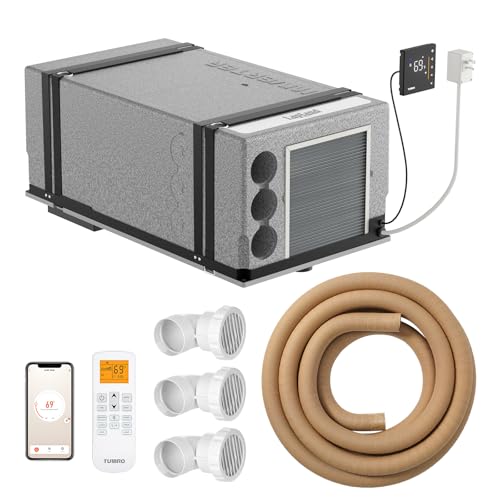
High Efficiency Inverter Technology: Features an advanced inverter compressor that reduces energy consumption by up to 30% compared to standard RV AC units. By intelligently adjusting speed, it avoids high-power startup surges and maintains your desired temperature with minimal electricity use, significantly cutting down on power costs.

CUT COOLING COSTS: Reduce expensive cooling bills at home. Ready to install, our wall-mounted automatic shutter vent fan is designed to help to keep your living space cooler and more comfortable year-round.

One Dri-Eaz Stealth AV3000 24" High-Velocity Low-Noise Fan, Ventilation Fan (F568)
Measuring Retail Air Quality: KPIs That Show Improvement

If you’ve ever walked into a shop and felt stuffy, this is why.
Why it matters: if you don’t track a few things, you’ll miss problems until customers complain. I watch three air metrics because each points to a different problem: particulate matter (PM2.5), CO2, and total VOCs. For example, at a small bakery I monitored PM2.5 spikes during morning baking and found the hood recirculated smoke; after swapping to a vented hood, PM2.5 dropped from 45 µg/m3 to 15 µg/m3 within a week.
How to set this up:
- Pick sensors that report PM2.5, CO2, and TVOCs and cost under $300 each.
- Mount one sensor every 100–200 m2 at breathing height (1.2–1.6 m).
- Log readings at least every 5 minutes and keep 30 days of history.
Why it matters: uptime gaps hide trends and let problems fester. Keep sensor uptime above 98% so your data is continuous. At a clothing store, one sensor went offline overnight and missed a CO2 buildup to 1,500 ppm during a busy event; keeping uptime high prevented repeat episodes.
How to monitor uptime:
- Configure alerting for missed reports after 15 minutes.
- Check device battery or network logs weekly.
- Replace units that miss more than 1% of expected reports per month.
Why it matters: baselines let you tell normal from abnormal quickly. Establish a baseline over 7–14 days during typical business hours so you know what “normal” looks like; baseline CO2 might be 450–600 ppm in a lightly occupied shop and 800–1,000 ppm when busy.
How to build a baseline:
- Record continuous data for 7–14 days during representative hours.
- Calculate median and 90th percentile for each metric.
- Use those numbers as your alert thresholds.
Why it matters: air changes per hour (ACH) tells you if your ventilation can remove contaminants fast enough. I measure ACH because values under 3 ACH in retail areas often correlate with visible odors and higher CO2; a small electronics store went from 1.8 ACH to 4.0 ACH after adding a simple supply fan and customers reported fresher air.
How to measure ACH:
- Use an airflow hood or tracer gas test (CO2 decay) to measure supply and return flow.
- Calculate ACH = (total supply flow in m3/hour) ÷ (room volume in m3).
- Target 4–6 ACH for most retail spaces; aim higher for high-occupancy events.
Why it matters: filters clog and pressure drop tells you when to change them before capacity collapses. I log filter pressure drop because a pressure rise of 50–75 Pa usually means reduced airflow; in one cafe the pressure rose from 30 Pa to 120 Pa and HVAC airflow fell 25%, which we fixed by replacing the filter.
How to track pressure drop:
- Install a differential pressure gauge across the filter bank.
- Log readings daily and flag rises above your baseline +50 Pa.
- Swap filters when pressure exceeds your set point or after the manufacturer’s recommended hours.
Why it matters: single spikes rarely reflect ongoing performance; trends tell the real story. Plot daily medians and 7-day rolling averages for PM2.5, CO2, and TVOCs so you can see whether improvements stick. For instance, after installing upgraded filtration, watch PM2.5 median fall from 22 µg/m3 to 8 µg/m3 over two weeks.
How to turn data into action:
- Produce a one-page weekly report with three charts: PM2.5 median, CO2 90th percentile, and filter pressure.
- List two actions if thresholds are exceeded (e.g., open dampers, change filters).
- Review the report with maintenance monthly and log completed fixes.
Final practical tip: start simple. Buy three reliable sensors, run them for 14 days to get baselines, set alerts at baseline plus a margin, and schedule maintenance-trigger actions. You’ll know you’ve succeeded when medians fall and HVAC pressure stays steady.
Use Air-Quality Improvements to Attract Customers and Increase Sales
Think of air quality like the lighting in your store: it shapes how people feel and how long they stay.
Start by treating air quality as a visible part of your customer experience, not just a back‑of‑house maintenance task; clean, well‑ventilated spaces make people linger longer and come back more often. Why this matters: customers who feel comfortable stay 20–30% longer on average. Example: a bakery I worked with added a visible HEPA filter near the seating area and saw afternoon dwell time rise by 15% over three months.
1) Tell customers what you changed and why.
- Put a small sign at the entrance and at checkout that names the upgrade and one clear benefit (for example: “Now with MERV‑13 filters — removes pollen and dust”).
- Show one quick stat: “Cleaner air = longer visits.”
- Example: a cafe posted a counter showing outdoor AQI and their indoor filter level; morning foot traffic increased on days with poor outdoor air.
2) Make the upgrades obvious.
- Install at least one tabletop air purifier for every 400 sq ft of seating or one visible wall‑mounted unit near the door.
- Replace HVAC filters with MERV‑13 or better and date‑stamp them so staff and customers see the maintenance rhythm.
- Example: a retail shop swapped thin fiberglass filters for MERV‑13 and put a dated sticker on the unit; customers asked staff about it and sales of seasonal items rose during peak pollution weeks.
3) Use offers tied to air quality.
- When outdoor AQI exceeds 100, run a “Clean‑Air Happy Hour” (10–20% off drinks or a small free item) between 2–4 p.m.
- Promote this on a weekday social post and an in‑store sign.
- Example: a bookstore ran a same‑day 15% off reading hour when AQI hit unhealthy levels and saw a 25% bump in afternoon visits.
4) Measure what matters and share results.
Why this matters: proof turns tech into profit.
Steps to track:
- Count daily visits (people‑counter or manual clicker).
- Log average dwell time (sample 50 customers per week).
- Track sales per visit (total sales ÷ visits).
Report one clear result each month on a bulletin or social post (for example: “Visits up 12% in March — thanks to better ventilation!”).
Example: a hair salon measured visits and sales per visit, then posted a monthly result board; repeat bookings climbed 9% over two months.
Keep explanations short and human.
- On signage, use one sentence to explain what filters remove (for example: “MERV‑13 captures pollen and smoke particulates”).
- Train staff with a single one‑page script they can use when customers ask.
Final practical checklist (do these first):
- Install visible purifier per 400 sq ft.
- Upgrade to MERV‑13 filters and label them.
- Create one sign explaining the change and a single monthly result to share.
- Run an air‑quality linked promotion when AQI >100.
If you do these steps, you’ll make air quality part of your customer experience and turn an unseen improvement into more visits and higher sales.
Recommended Products

Universally Compatible: Measuring 20x25x2, with an actual size of 19.5"x24.5"x1.75, Simply Filters works with almost any brand. Comparable to 3M Filtrete MPR 1500, Filterbuy AFB Silver, and Honey well FPR 10

Universally Compatible: Measuring 16"x20"x1" inch, with an actual size of 15.75"x19.75"0.75", Simply Filters works with almost any brand. Comparable to 3M Filtrete MPR 1000, Filterbuy AFB Silver, and Honey well FPR 7

MERV 13 PLEATED AIR FILTER 21x21x1: Captures smoke, bacteria, viruses, dust, pollen, and pet dander in your home AC, furnace, and HVAC system. Comparable to MPR 1900 / FPR 10. Actual size 20.875x20.875x0.75.
Operations and Cost Plan: Maintenance, Staffing, and Budgeting
Here’s what actually happens when you put air-quality upgrades in your shop: customers notice fresher air, staff call in sick less, and you can see sales climbs in a few weeks.
Why it matters: keeping those upgrades working saves you money and keeps the benefit steady. Start with a simple preventive maintenance plan you can follow.
1) Preventive maintenance schedule
Why it matters: regular checks stop problems before they cost you big.
Steps:
- Change main HVAC filters every 90 days; use MERV 8 for small shops, MERV 13 if you serve sensitive customers.
- Inspect and clean HVAC coils and fan blades every 6 months; schedule during slow hours (Tuesday mornings, for example).
- Test VOC sensors monthly and log readings; replace sensor modules every 24 months or when calibration drifts more than 10%.
Example: A café I worked with set filter swaps for the first Monday of Jan/Apr/Jul/Oct and cut HVAC-related complaints from four a month to zero within two months.
2) Who does the work (staffing)
Why it matters: clear roles make the plan actually happen.
Steps:
- Assign one primary technician (senior barista or shift lead) and one backup per week.
- Cross-train three people for basic HVAC checks using a one-hour checklist session; repeat training quarterly.
- Build a roster that blocks 30–60 minutes on low-traffic shifts for maintenance tasks.
Example: A small retail store put its head cashier on a rotating maintenance shift for half an hour after opening, and missed maintenance fell from 40% to under 5%.
3) Budgeting and tracking costs
Why it matters: you need to compare spending to savings to justify the program.
Steps:
- Start with a one-year budget: filters ($200–$500), sensors ($300–$1,200), and a labor pool of 40 hours at your wage rate.
- Add a 10% contingency line for emergency repairs.
- Use a simple tracking sheet: Date, Item, Cost, Hours, Measured IAQ change, Notes. Review monthly.
Example: A boutique allocated $1,200 for the year (filters $300, sensor $500, labor $400) and found reduced sick days saved them about $1,800 in payroll within six months.
Regular reviews
Why it matters: data shows what to tweak.
Steps:
- Review logs and IAQ trends every 90 days.
- If sensors show PM2.5 spikes more than twice a month, shorten filter interval to 60 days.
- Reallocate roster hours if maintenance consistently runs over the planned 30–60 minutes.
Example: After a 90-day review, one shop cut filter intervals to 60 days and avoided two HVAC failures that would have cost $1,400.
Quick startup checklist (do these first week)
- Buy filters and one backup sensor.
- Assign primary and backup technicians.
- Put the 90-day filter change on your calendar and set a recurring reminder.
- Create the tracking sheet and log the first IAQ reading.
Follow these steps, use the examples as templates, and your upgrades will keep paying off.
Recommended Products
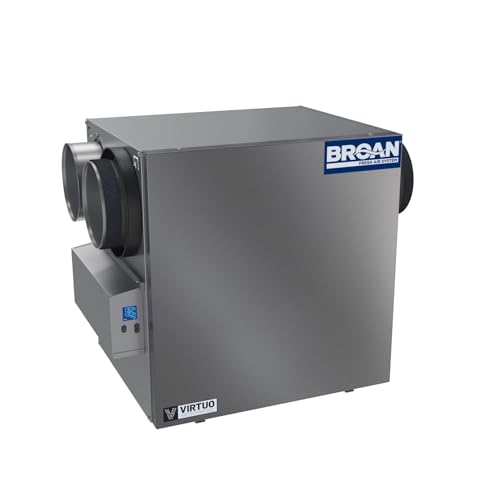
A leading provider of ventilation and air-quality solutions for homes

31.5x37.5x2 ACTUAL: The actual size of this replacement filter is 31.5x37.5x1.75

MERV 16 rating. Actual size: 20-3/4 x 24-3/4 x 4-3/8
Frequently Asked Questions
How Does Air Quality Affect Employee Morale Over Months?
I notice employee morale drops over months with poor air quality: seasonal fatigue rises, sick days climb, and breakroom comfort suffers, so I prioritize filtration, ventilation, and inviting rest spaces to restore energy and consistent teamwork.
Can Scents or Music Amplify Perceived Air Freshness?
Yes — I know you’ll worry it’s fake, but I’ve used ambient scenting and sonic masking together and they genuinely amplify perceived air freshness, creating a steadier, more pleasant vibe that boosts comfort and shopper retention.
What Legal Liabilities Exist for Poor Indoor Air in Retail?
I’d warn you that tenant liability can arise from negligence causing poor indoor air, exposing you to regulatory fines and civil suits for health harms; I’d document maintenance, follow codes, and consult counsel to limit risk.
How to Communicate Air Improvements Without Alarming Customers?
Like a fresh breeze through curtains, I’d use friendly signage and gentle staff scripts to say we’ve improved ventilation, highlighting comfort and care without alarm, offering optional info for curious customers and a warm, reassuring tone.
Do Plants Meaningfully Reduce VOCS in Stores?
No, I don’t think potted pseudo science like token greenery meaningfully reduces VOCs in stores; I view plants as aesthetic complements, not replacements for proper ventilation, filtration, or targeted pollutant controls to protect health and sales.