You notice a thin gray haze on a sunny windowsill and assume the chunky dust bunnies on the floor are the real problem. The exact question nagging you: should you be wiping surfaces or worrying about air?
Most people focus on visible dust and dramatic cleaning, missing the tiny particles you can’t see. This intro will show you why PM2.5 matters more than visible dust, how those tiny particles travel and harm your lungs, and three practical steps—sealing, HEPA filtration, and masks—to cut exposure. It’s easier than you think.
Key Takeaways
If you’ve ever walked into a room that looks clean but feels “stuffy,” this is why. PM2.5 are particles smaller than 2.5 micrometers, so they stay airborne for hours and slip through tiny gaps and HVAC vents — you can’t see them, but they move around your whole home.
Why this matters: these tiny particles get deep into your lungs and into your bloodstream, raising your risk of inflammation and heart problems. For example, when someone cooks stir-fry on high heat without a hood fan, PM2.5 spikes and lingers for hours, even if counters look spotless.
The difference between visible dust and PM2.5 comes down to where they end up. Visible dust settles fast and you can wipe it away with a damp cloth; PM2.5 drifts and hangs in the air. A real example: after sweeping a floor, you’ll see dust on the broom, but an indoor air monitor will still show elevated PM2.5 for an hour.
Before you assume an air freshener fixes this, remember: PM2.5 triggers stronger inflammatory and cardiovascular responses than larger particles. One household example is burning candles — your living room may smell nice, but a monitor often shows PM2.5 levels that match heavy traffic outdoors.
You don’t need an industrial setup to reduce PM2.5 if you act right away. Steps to lower your exposure:
- Source control: cook with your range hood on high or open a window while frying (reduces PM2.5 by roughly 50% in many studies).
- Air cleaning: run a true HEPA air cleaner sized for your room — pick one that states Clean Air Delivery Rate (CADR) and run it on medium or high for at least 30 minutes after cooking.
- Ventilation timing: when outdoor air quality is poor, keep windows closed and rely on filtration instead.
- Masking: if you’re in a smoky environment, wear an N95; it filters ~95% of PM2.5.
Why take these steps now: common sources like cooking, traffic, and combustion make PM2.5 high even when air looks clean, and simple actions (hood fan on, HEPA running) cut your personal exposure substantially.
PM2.5 vs. Visible Dust : What’s the Difference?
Think of PM2.5 like smoke and visible dust like crumbs.
Why this matters: knowing which you’re dealing with changes how you protect your health. Visible dust is stuff you can see and wipe away, like flaky skin cells or textile fibers that settle on a table. For example, after sanding wood in your garage you’ll see a pile of coarse dust on the floor that you can sweep up with a broom.
Why this matters: the particle size determines where particles go in your body. PM2.5 are particles smaller than 2.5 micrometers, invisible without instruments, and they behave like tiny pieces of soot or chemical aerosols. For example, when you light a candle in a closed room, tiny dark particles from the flame can hang in the air and reach deep into your lungs.
How they differ in composition:
- Visible dust — contains larger bits such as skin cells, hair, fabric fibers, and soil grains. Example: after changing a bed sheet you might see lint on a nightstand.
- PM2.5 — contains combustion byproducts, vehicle exhaust, and fine chemical aerosols that you can’t see. Example: standing near city traffic, you’re exposed to exhaust particles you won’t notice visually.
Why this matters: their behavior affects how long they stay airborne and where they end up in your home. Larger dust settles quickly onto surfaces and you can control it with cleaning. PM2.5 stays airborne for hours and drifts indoors from outside sources or indoor activities like cooking and frying.
How to protect yourself (specific steps):
- Reduce sources: close windows during heavy traffic or wildfires; avoid indoor smoking; cook with a range hood vented outside.
- Remove particles: use a vacuum with a HEPA filter for visible dust; wipe surfaces with a damp cloth to pick up settled dust.
- Filter the air: run a portable air purifier with HEPA filtration rated for your room size (look for CADR matching your room square footage). Example: for a 200 sq ft bedroom, pick a purifier with a CADR of at least 150.
Why this matters: health effects are different so prevention differs too. Visible dust mainly irritates your eyes, nose, and throat. PM2.5 can penetrate deep into your lungs and affect your heart, increasing risks for asthma attacks and cardiovascular issues.
Final practical tip: focus on cleaning visible dust weekly and using ventilation plus a HEPA-rated purifier during high-PM2.5 events.
Why PM2.5’s Tiny Size Matters

Think of PM2.5 like tiny needles in the air that behave very differently from ordinary dust.
Why this matters: because these particles stay airborne longer and reach places bigger particles can’t, affecting both your home and your body.
Because their diameter is under 2.5 micrometers, aerosol physics makes them stay aloft for hours and travel on air currents through door gaps and HVAC vents; for example, wildfire smoke can move through a closed window frame and fill a living room. Once inhaled, they go deep into your lungs and can cross into your bloodstream, causing effects throughout your body. At the cellular level, tiny particles are more easily taken up by cells, which alters immune signals and triggers inflammation that shows up as cough, worse asthma, or higher risk of heart problems.
How this changes what you should do: follow these steps to reduce exposure at home.
- Seal obvious gaps: use weatherstripping on doors and caulk around windows (aim for <1 mm gaps).
- Filter the air: run a HEPA or true HEPA-rated portable air cleaner sized for your room—look for CADR that matches your room area (use CADR ≈ room area × 1.5).
- Vent smart: when outdoor PM2.5 is high, keep windows closed and use mechanical ventilation with filtered intake; when outdoor air is clean, open windows for 5–10 minutes mid-morning to refresh indoor air.
- Mask when needed: wear an N95/FFP2 if you must be outdoors during heavy smoke or pollution events.
Real-world example: during a regional wildfire, a neighbor left windows cracked and the living room PM2.5 spiked to hazardous levels; they sealed the gaps, ran a HEPA unit set to high, and the level dropped from hazardous to moderate in under an hour.
Persistence, penetration, and biological access explain why PM2.5 raises health risks and why simple, measurable actions—sealing gaps, using a right-sized HEPA filter, and wearing a proper mask—protect you.
How PM2.5 Is Measured : What the Numbers Mean

Before you check a PM2.5 number, know why it matters: that number tells you how many tiny particles are in the air and whether you should change your plans. Think of your smartphone air-quality apps and home monitors as tools that tell you when to stay inside, wear a mask, or run an air purifier.
The difference between gravimetric sampling and optical sensing comes down to one thing: accuracy versus speed. Gravimetric sampling physically collects particles on a filter and gives a true mass in micrograms per cubic meter (µg/m³); labs weigh filters, so results are accurate but take days. Optical sensors estimate mass by measuring light scattering and give near-real-time numbers, which is why you’ll see rapid updates on apps. Example: a community monitor that uses a filter might report 55 µg/m³ for yesterday, while a cheap optical sensor on your porch might show 60 µg/m³ right now because smoke just drifted through.
Before you trust an optical sensor, do these three steps to check it:
- Compare its readings to a nearby reference monitor for a week and note differences.
- Recalibrate using the manufacturer’s procedure or a correction factor if you find a consistent bias.
- Clean or replace the inlet and sensor optics every 3–6 months, depending on dust or smoke.
Do this and your readings will be far more useful.
If you’ve ever wondered what the numbers mean for your health, here’s a simple guide you can use. Knowing the range tells you what to do next.
- 0–12 µg/m³: Good — you can do outdoor exercise without worry.
- 13–35 µg/m³: Moderate — sensitive people should consider shorter or lighter workouts outside.
- 36–55 µg/m³: Unhealthy for sensitive groups — kids, older adults, and people with lung disease should avoid prolonged outdoor exertion.
- 56–150 µg/m³: Unhealthy — everyone should cut outdoor time and run a HEPA air purifier indoors.
- 151+ µg/m³: Very unhealthy to hazardous — stay indoors with windows closed and use a properly sized purifier; consider wearing an N95 if you must go outside.
You don’t need expensive mapping software if you want to see exposure differences across your neighborhood, but you do need a plan. Steps to map exposure yourself:
- Pick three routes you use often (home to school, work, grocery).
- Carry a calibrated portable monitor for one week and record time-stamped readings.
- Plot the highest hourly average per route on a simple map or spreadsheet to see hotspots.
Example: I walked the route from my apartment to the subway and found a 2-block stretch with regular spikes to 80 µg/m³ during morning traffic; I now take a slightly longer, less trafficked route.
When you read a PM2.5 value, remember the unit: µg/m³. That number is a mass concentration — mass of particles in one cubic meter of air — and actions are based on ranges, not single digits. If your monitor shows sudden spikes, check the time and location, and use the steps above to decide whether to mask up, change routes, or turn on your purifier.
Recommended Products

【Professional Particle Counter】Particle Meter accurately detects the particle count and mass concentration of dust particles 0.3/0.5/1.0/2.5/5.0/10.0 μm in size. It offers a PM2.5/PM10 range of 0-1000 μg/m³, with an accuracy of ±10 μg/m³ (0-100 μg/m³) and ±10% (100-1000 μg/m³). Temp range: 14-140°F (°C/°F switchable ); humidity range: 0-100%, suitable for Class 100 cleanroom testing.
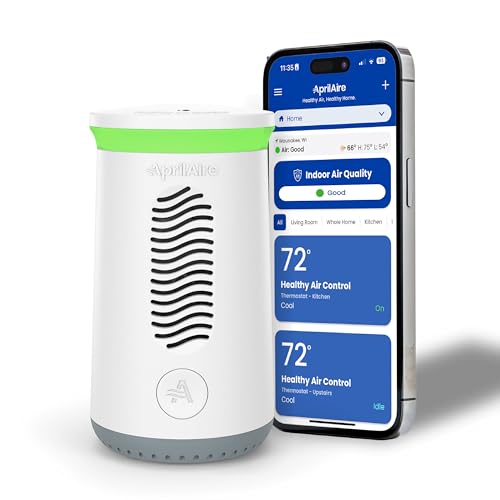
Be Aware of Your Air – Smart indoor 5-IN-1 Wi-Fi Air quality monitor that measures PM2.5 particulate matter (air pollution), VOCs, TVOC, (airborne volatile organic compounds such as kitchen gases, fumes and cleaning products), CO2 (carbon dioxide), humidity, and temperature. Requires the AprilAire Healthy Air App to function.

PM2.5 IR SENSOR: advanced optical sensor detects very fine particles that are 2.5 microns or smaller
Short-Term Health Effects of PM2.5

If you’ve ever been short of breath after a smoky day, this is why.
Short-term exposure to PM2.5 matters because it can trigger quick inflammation in your lungs. When tiny particles reach the deep air sacs, they irritate the lining and summon immune cells that cause swelling and mucus. Example: imagine a child running at a playground on a hazy afternoon who starts coughing and wheezing within an hour — that sudden asthma flare is a direct response to those particles.
What you’ll feel and why it happens:
- Airway irritation and cough. The particles prick the airways, so you’ll cough and feel tightness.
- Worse asthma attacks. If you have asthma, you’ll notice symptoms spike within hours.
- Increased risk of heart problems. Some particles cross into your bloodstream and can raise the chance of a heart attack or an irregular heartbeat within a day or two.
- More emergency visits for lung conditions. Hospitals see rises in COPD flares, bronchitis, and respiratory infections after high-pollution days.
Concrete steps you can take right away — follow these when levels rise:
- Check the number. If the PM2.5 reading is above 35 µg/m3, cut outdoor time.
- Move activities indoors for at least 24 hours when readings are high.
- Use a HEPA or true HEPA air purifier in the room where you sleep; set it to the bedroom’s size.
- Wear an N95 or well-fitted KN95 mask if you must be outside during spikes.
- Keep rescue inhalers and heart meds handy and follow your doctor’s action plan.
- Close windows and run HVAC on recirculate during poor-air days.
Practical example: if tomorrow’s forecast shows PM2.5 at 60 µg/m3, cancel outdoor soccer, run an air purifier on high in the living room, and have your child’s inhaler within reach.
If you have heart or lung disease, or care for infants and elders, these precautions lower immediate risks. Use the specific PM2.5 thresholds and steps above to protect them.
Recommended Products

This purifier is the most advanced and complete chemical and VOC filtration system on the market today.
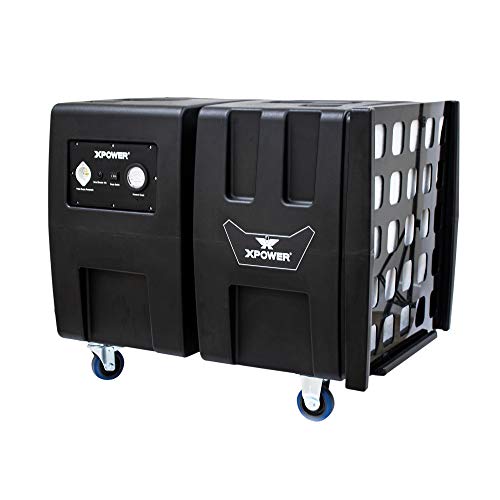
Efficiently re-mediate large spaces such as: hospitals, schools, arenas, gyms, conference halls, hotels, and any other largely occupied areas. 40.2 x 29 x 32.3 inches 112.4 pounds

Maximum coverage: AirDoctor 5500i is the perfect air purifier for large rooms and open concept spaces. Circulates the air in 1043 sq. ft. 4x/hour or 2086 sq. ft 2x/hour. CARB EO G-23-243 & FCC ID 2AC7Z-ESPS3WROOM1
Long-Term Risks From Chronic PM2.5 Exposure

Here’s what actually happens when you breathe PM2.5 every day: it slowly wears down your body in ways you probably won’t feel until years later. Why this matters: chronic exposure raises your risk of heart attack, stroke, lung cancer, progressive lung disease, diabetes, and cognitive decline.
Why particles harm you in plain terms: PM2.5 are tiny enough to get into your lungs and then into your bloodstream, where they trigger persistent inflammation that damages organs over time. Real-world example: a commuter who spends an hour each morning cycling beside a busy highway will inhale far more PM2.5 than someone who takes a side street, and over five years that difference can show up in blood pressure and lung function.
How PM2.5 increases cardiovascular risk — and what you can do about it (Why: heart and blood vessel damage is the top long-term danger):
- Action: reduce indoor PM2.5.
- Run a portable HEPA air purifier sized for your room for at least 8 hours a day; pick one rated for your room area (look for CADR and room-square-foot guidance).
- Example: a 300 sq ft bedroom needs a purifier with a CADR ≈ 200–300.
- Open windows for 10 minutes in the morning when outdoor PM2.5 is below 12 µg/m3 (check local air quality apps).
- Example: on a low-pollution morning, open two windows opposite each other to create cross-ventilation for rapid air exchange.
- Shift your commute time by 30–60 minutes or choose a route that’s at least 100 meters from major roads when possible.
- Example: moving your jogging route one block inland cuts immediate PM2.5 exposure significantly.
How PM2.5 affects your lungs and cancer risk — and what you can do about it (Why: lung tissue damage accumulates and raises cancer and COPD risk):
- Action: stop indoor sources.
- Use an electric stove or run a kitchen-range hood rated to exhaust outdoors when cooking; don’t burn candles or incense daily.
- Example: using the hood on high for 10 minutes while frying reduces particulate spikes by over 50%.
- Check hourly AQI; if AQI > 100, keep windows closed and run your HEPA purifier on high.
- Example: during a nearby wildfire day with AQI 200, keep purifier on max and avoid outdoor chores.
How PM2.5 links to diabetes and brain changes — and what you can do about it (Why: metabolic and cognitive risks show up slowly but are preventable):
- Action: reduce overall exposure and improve health buffers.
- Keep indoor PM2.5 under 12 µg/m3 and maintain regular exercise indoors or in low-traffic parks; aim for 150 minutes/week of moderate activity.
- Example: swapping a roadside run for a 30-minute workout at home five times a week preserves fitness without extra PM2.5.
- Ask for blood pressure, fasting glucose, and cognition screening if you’ve had long pollutant exposure.
- Example: a simple annual fasting glucose test can catch early changes from environmental stressors.
Everyday checklist you can use starting today (Why: small changes add up):
- Buy a HEPA purifier sized for your main living room and bedroom.
- Check hourly AQI on your phone and avoid outdoor exertion when AQI > 100.
- Use a kitchen exhaust fan every time you cook, and avoid indoor smoking or frequent candles.
- Choose lower-traffic routes for walking or cycling; keep 100+ meters from highways when possible.
- Advocate locally: ask your city council for stricter idling rules or more green buffers near busy roads.
Final concrete tip: aim to keep your indoor PM2.5 below 12 µg/m3—use a low-cost particle monitor to measure it and adjust purifier settings until you hit that target.
Recommended Products

COMPLETE HOME STARTER BUNDLE - Breathe cleaner air in every room with the iAdaptAir Home Air Purifier Starter Bundle. Includes 1 Small, 1 Medium, and 1 Large purifier, delivering powerful, multi-room air purification for living rooms, kitchens, bedrooms, and other shared spaces in your home. Perfect for families, allergy sufferers, and anyone looking to improve indoor air quality.

AD 5500 offers maximum coverage: AirDoctor 5500 is the most powerful air purifier in the AirDoctor family. Perfect air purifier for large households, high ceilings and open concepts, such as living spaces, master bedrooms, home gyms and more. Circulates the air in 1,043 sq. ft. 4x/ hour or in 2,086 sq. ft. 2x/hour. CARB EO G-23-243

Maximum Coverage, Cleans Large Spaces up to 1,875 sq ft every hour, 937 sq ft every 30 minutes.
Who Is Most Vulnerable to PM2.5
If you’ve ever had a cough that just wouldn’t quit, this is why.
Because tiny particles like PM2.5 can slip deep into your lungs and enter your bloodstream, some people are far more at risk from air pollution than others. Young children are especially vulnerable because their lungs are still developing, they breathe more air per pound of body weight, and they tend to get greater inflammation and slower lung growth. For example, a 3-year-old playing outside near a busy road can inhale noticeably more polluted air than an adult walking the same route, increasing the chance of repeated respiratory infections.
Before you assume age is the only factor, consider your heart and lungs.
Older adults and people with heart or lung disease face higher risks because PM2.5 can trigger heart attacks, strokes, and worsen COPD. If your neighbor is a 72-year-old with coronary artery disease who spends long afternoons near a traffic-heavy intersection, their risk of a cardiovascular event rises on high-pollution days.
Think of exposure like unequal stairs.
Pregnant people and infants are vulnerable because PM2.5 exposure is linked to lower birth weights and early developmental problems. A specific example: a pregnant person who lives next to a factory and experiences repeated pollution spikes may be more likely to have a baby with reduced birth weight, which can affect health in infancy.
If you’ve ever lived on a busy street, you know this feels unfair.
Low-income communities and many minorities often suffer more exposure and worse outcomes because local zoning, fewer green spaces, and limited access to healthcare increase both pollution levels and its harms. Picture a family in an urban apartment under a highway overpass: they face constant noise, traffic fumes, and fewer places to go for medical care when breathing gets worse.
Why this matters: you can change some risks.
How to reduce your and your family’s exposure (concrete steps):
- Check air quality each morning using an app like AirNow or a local site. If AQI is over 100, limit outdoor time.
- Use a HEPA air purifier at home sized for your main living room—look for Clean Air Delivery Rate (CADR) that matches the room square footage.
- On high-pollution days, close windows, run the purifier, and avoid heavy exertion outside.
- For kids, choose indoor play during peak traffic hours (typically 7–9 AM and 4–7 PM).
- If you or a family member has heart or lung disease, keep medications handy and follow your doctor’s emergency plan.
Example: run the purifier for 12 hours overnight in a 200–300 sq ft bedroom with windows closed when AQI is unhealthy.
If you have limited resources, focus on high-impact fixes.
Practical low-cost steps:
- Seal window gaps with weatherstripping to reduce infiltration.
- Use a DIY box fan + MERV-13 filter in a closed room when you can’t buy a purifier.
- Plant dense shrubs or place potted plants near windows to help reduce dust and particulates (they won’t stop PM2.5 but can help with larger particles).
Example: sealing a single bedroom and running a box-fan filter while sleeping can cut your nighttime exposure significantly.
Who should talk to a clinician now:
- Anyone with chest pain, sudden shortness of breath, fainting, or confusion during a pollution event.
- Pregnant people noticing reduced fetal movements or unusual symptoms.
- Parents of infants with persistent coughing or poor feeding.
Example: call your clinic or emergency services immediately if an older adult nearby becomes dizzy and clutches their chest during a smoggy afternoon.
Final takeaway: know your personal risk, check the AQI, and use practical steps—like a properly sized HEPA purifier, sealing windows, and timing outdoor activities—to cut exposure now.
Where PM2.5 Is Highest : Regions and Causes
If you’ve ever wondered why some places have worse air than others, this explains it.
Why it matters: where PM2.5 is highest determines who breathes the most harmful air and what you can do about it.
In South and East Asia, you’ll see the highest concentrations because dense cities, coal-fired power plants, and heavy traffic all add fine particles day after day. For example, in Delhi on a winter morning you can see a gray haze that stays for weeks when temperatures drop and winds calm. Steps you can take if you live there:
- Check local PM2.5 forecasts daily and avoid outdoor exercise when levels exceed 100 µg/m3.
- Use an indoor air purifier rated for your room size and replace filters every 6 months.
- If you commute, choose cleaner transport options when possible, like electric buses or carpooling.
Large parts of the Middle East and North Africa get sudden spikes from seasonal dust storms that lift mineral dust into the air and move it hundreds of kilometers. For instance, a sandstorm can turn Cairo’s skyline orange and double PM2.5 for a day. Practical things you can do:
- Close windows and seal gaps in your home when a dust storm is forecast.
- Wear an N95 or FFP2 mask outdoors during storms to cut fine dust exposure by about 60–80%.
- Wet sweep floors instead of dry sweeping to avoid stirring dust indoors.
In West Africa and parts of Central Asia, land degradation and drier climates increase dust sources, sending more particles into the air during dry seasons. Imagine a village near shrinking grasslands where plumes of dust follow each dry wind. Actions you can take:
- Support or participate in local replanting and erosion-control projects.
- Store food and water in sealed containers to avoid contamination after dust events.
Industrial zones in Europe and North America show localized peaks near factories or heavy traffic corridors rather than broad regional pollution. You might notice a persistent smell or visible emissions near an industrial park in a smaller city. If you live nearby:
- Track emissions reports from your local environmental agency.
- Advocate for buffer zones and emission controls with community groups.
Each region’s pattern comes from different causes, so your response should be targeted. Pick one immediate step from the list above that fits your situation and act this week.
Recommended Products

Stens replacement parts have become a favorite among lawn and landscape professionals thanks to exceptional performance.

PROFESSIONAL PARTICLE COUNTER: CEM with 20 years of R&D experience in the particulate sensor. With the mie-scattering principle, it detects 6 different particles sizes simultaneously, including 0.3μm, 0.5μm, 1μm, 2.5μm, 5μm, and 10μm. With a variety of air quality monitoring functions, HCHO TVOC CO2,etc

ADVANCED HYPERHEPA FILTRATION - Designed to remove and trap 99.995% of all airborne particles down to 0.003 microns, the HealthPro Plus XE provides unequaled protection against dust, pollen, pet dander, smoke from wildfires, and more. True HEPA filtration. Perfect for spaces up to 1125 sq ft.
Practical Steps to Reduce Your PM2.5 Exposure
If you’ve ever noticed dust and smoke in your home, this is why. Reducing the PM2.5 you breathe matters because those tiny particles can irritate your lungs and raise your risk of heart and lung problems over years.
At home — how do I cut indoor PM2.5?
Why it matters: most indoor PM2.5 comes from cooking and outdoor air leaking in, so controlling both cuts your exposure quickly.
Real example: my neighbor runs a bedroom HEPA while cooking and can smell less smoke after 15 minutes.
Steps:
- Run a true HEPA air cleaner in the bedroom and main living room for at least 1 hour after cooking and continuously overnight; choose a unit rated for your room size (look for CADR that covers the square footage; e.g., 300 sq ft needs ~300 CADR).
- Seal obvious leaks: caulk gaps around window frames and install weatherstripping on doors; these fixes often cost $10–30 and reduce infiltration.
- Use the kitchen exhaust fan on high and run a portable HEPA near the stove while you cook for 10–30 minutes after cooking. If you don’t have an exhaust fan, crack a window and run a box fan blowing outward.
At school or work — which rooms should you pick?
Why it matters: room placement and ventilation determine how much outdoor PM2.5 reaches you at work or school, so picking the right spot lowers your daily dose.
Real example: a teacher I know moved her desk from a window facing a busy street to a room center and noticed fewer afternoon headaches.
Steps:
- Sit or work at least 10–15 feet away from windows that face busy roads or loading zones.
- Ask facilities to balance ventilation: request increased fresh-air intake when outdoor AQI is low and reduced intake when AQI is high; offer to bring a portable HEPA unit for your classroom or office if allowed.
- If you share space, suggest one portable HEPA unit per 250–400 sq ft to meaningfully lower PM2.5 for everyone.
Outdoors — when should you stay cautious?
Why it matters: outdoor PM2.5 spikes during wildfires, heavy traffic, or inversions, and reducing exertion or using a mask cuts what you inhale.
Real example: a jogger I know checks the AQI app before runs and switches to indoor treadmill when the index is over 100.
Steps:
- Check a reliable AQI app before going out; avoid strenuous outdoor exercise when AQI (PM2.5) is above 100.
- If you must be outside during high PM2.5, wear a fitted N95 or KN95 rated for particles and ensure a seal around your nose and chin; surgical masks are much less protective.
- Shorten outdoor tasks to under 20–30 minutes when levels are elevated, and take more frequent low-activity breaks indoors.
Final practical tip
Why it matters: small, consistent actions add up to much lower exposure over months and years.
Real example: a family combined simple sealing, a single living-room HEPA, and mask use on bad days and cut their smoke-season symptoms dramatically.
Steps:
- Track changes: use a cheap indoor PM2.5 monitor to see the effect of each action (filters, sealing, cooking changes) and run the settings that show the biggest drop.
- Prioritize fixes you can afford and maintain: a $100 HEPA and basic weatherstripping are usually the best first moves.
Recommended Products
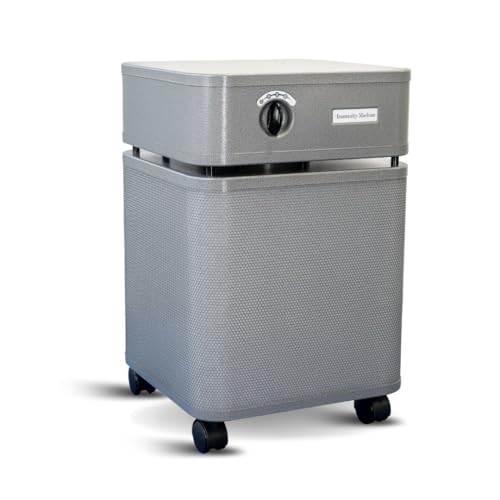
8-PHASE FILTRATION FOR CLEANER AIR – The Immunity Machine combines cutting-edge 8-phase filtration with HEPA air purifiers for home technology to capture dust, allergens, and other fine particles, providing cleaner air throughout your living space.

COMPACT DESIGN, MAXIMUM EFFICIENCY - Space saving design without compromising on HyperHEPA filtration, capturing 99.5% of particles down to 0.003 microns. This room air purifier removes mold, pollen, dust, smoke, allergens, pet dander, asthma triggers, and even ultra-fine viruses and bacteria from the air. Perfect for spaces up to 1240 sq ft.

18-lb enhanced carbon filter adsorbs most common harmful, airborne particles and pollutants.
Frequently Asked Questions
Can Indoor Air Purifiers Fully Eliminate PM2.5 Exposure?
No — I can’t fully eliminate PM2.5 with an indoor air purifier; HEPA limitations and room leakage matter. I’ll reduce levels substantially, but only with strict maintenance schedules, proper sizing, and limiting outdoor/indoor sources.
Can PM2.5 Cross the Placenta and Affect Fetal Development?
Yes — I’ve seen studies showing PM2.5 crosses the placenta, causing placental inflammation and altering developmental epigenetics; one study linked exposures to an 8% increase in adverse birth outcomes per 10 µg/m³ rise.
Do Face Masks Filtered for Particles Protect Against Indoor PM2.5?
Yes — I’ve found masks filtered for particles can reduce indoor PM2.5 exposure, but real protection depends on Mask efficacy and proper Fit testing; poorly fitting or low-efficiency masks won’t reliably stop fine particulate penetration.
How Does PM2.5 Interact With Wildfire Smoke Versus Traffic Pollution?
Wildfire smoke and traffic pollution both have similar particle size, but I see wildfire PM2.5 richer in organic carbon and combustion chemicals, while traffic PM2.5 has more metals, black carbon and varied chemical composition.
Are There Reliable Personal Monitors for Everyday PM2.5 Tracking?
Yes — I’ve tested wearable monitors and low cost sensors; they’re useful for trends and alerts but not medical-grade. I’d cross-check with reference devices, calibrate regularly, and treat readings as directional, not definitive.