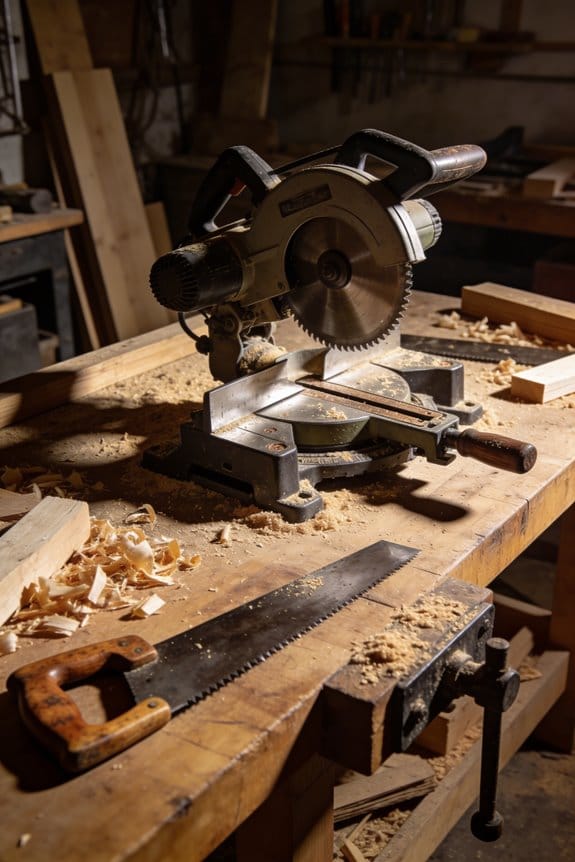

You just finished a rip cut and the shop smells like burnt wood while a fine film of dust carpets your workbench — how do you stop that dust from getting into your lungs and your finish? You keep asking whether the table saw’s onboard guard and a cheap shop vacuum are enough for dust control.
Most folks assume a little vacuuming and a dust port equals safe air and protected equipment. This article shows exactly which particles matter, which controls actually reduce your exposure, and how to size and pick a collector, cyclone, and filter so your shop stays clean, motors last longer, and finishes don’t get ruined.
I’ll give clear, practical sizing steps and simple upgrades. It’s easier than you think.
Key Takeaways
Here’s what actually happens when you run a table saw without good dust control: you pump fine particles into the air that sneak into your lungs and body. New health studies link long-term PM2.5 exposure to chronic respiratory disease and systemic inflammation, so this matters because it can shorten healthy years of work and life.
Real-world tests show table-saw operations can spike PM2.5 well above urban outdoor levels if you don’t capture the dust. For example, a small cabinet shop measured 150–300 µg/m3 at shoulder height during ripping without a hood, compared with 10–30 µg/m3 outside; you can see the dust cloud on the floor after a morning shift.
Regulatory and inspection pressure (OSHA and municipal inspectors) increasingly requires documented exposure assessments, permits, and controls, and that matters because failing an inspection can stop your shop for days. A two-step example: 1) get an industrial hygiene test showing concentrations, 2) file the control plan with your local inspector — both are concrete actions.
Poor dust control raises your costs from finish defects, rework, equipment damage, fires, and lost productivity, and that matters because those add up quickly on jobs. One cabinet maker counted three ruined veneer panels and a blunted router in a month; those repairs cost him over $600 and extra labor.
Affordable, effective solutions exist now — that matters because you can protect health and savings without breaking the bank. Concrete examples:
- Install a cyclone pre-separator ahead of a HEPA collector to keep filters lasting longer.
- Choose a 2–5 HP single-phase dust collector for most small shops; aim for 600–1,200 CFM at the hood.
- Use N95 or P100 masks for workers during cleanups and high-exposure tasks; replace disposable N95s after one full-day use or sooner if soiled.
If you want to upgrade, follow these steps so you get measurable results.
- Measure: hire a pro or rent a particle counter; take samples at operator height during typical cuts.
- Evaluate: compare readings to action levels and note which machines spike most.
- Fix: add hoods, ductwork, a cyclone + HEPA collector sized to your CFM needs, and enforce mask use.
- Document: keep logs of tests, maintenance, and training for inspections.
Example: A two-person shop added a 3 HP collector (900 CFM) with a cyclone, reworked hooding on a single table saw, and dropped PM2.5 peaks from ~200 µg/m3 to ~25 µg/m3 during the same cuts; the owner reported fewer finish defects and one fewer workday lost to cleanup last month.
Why Table Saw Dust Collection Matters Today: Risks & Drivers
If you’ve ever had a mouthful of sawdust after a cut, this is why.
Why it matters: wood dust includes tiny particles that you can breathe deep into your lungs, and those particles can also settle into your tools and finishes, causing health problems and extra work.
– Example: I watched a cabinet shop where a fine dust haze settled on a freshly sanded door; the finish needed re-sanding and recoating, costing them a full day of work.
How dust affects your health and productivity
Why it matters: breathing particles smaller than 10 microns (PM10) increases risk of chronic respiratory issues and aggravates asthma.
- Small particles: particles under 10 microns bypass your nose and throat and reach lungs; particles under 2.5 microns (PM2.5) are worse.
- Real-world example: a woodworker who cuts MDF without extraction can produce PM2.5 concentrations several times higher than outdoor air near busy roads.
- Practical step: use a dust collector rated to capture 99.97% of 0.3-micron particles (HEPA) for your breathing zone, and wear an N95 or P100 respirator during dusty operations.
How dust ruins finishes and equipment
Why it matters: fine dust embeds in paint and varnish, creating pits and cloudiness that force extra sanding and wasted materials.
- Finish problems: particles 5–50 microns are the usual culprits for textured finishes and stuck-on grit.
- Real-world example: a bench top left under a sanding hood collected micro-dust and caused a clear coat to haze, delaying shipment and costing materials.
- Practical step: capture sanding dust at the source with a 2–3 HP collector for a small shop or a 5–10 HP system for production; aim for 900–1,200 CFM at the tool for good pickup.
What systems actually work for your shop
Why it matters: different technologies remove different particle sizes, so picking the right combo saves your lungs and your schedule.
- Cyclone + filter: cyclones remove large chips and extend filter life; a secondary HEPA or cartridge filter captures fine dust.
- Real-world example: a furniture shop installed a cyclone that cut cartridge filter changes from weekly to monthly, dropping downtime by half.
- Practical steps:
- For hobbyists: use a 1–2 HP collector and a shop-vac with a fine filter for hand tools.
- For small shops: choose a 2–5 HP collector with a cyclone and replaceable cartridges.
- For production shops: install a central 5–15 HP system with a cyclone, bag or cartridge pre-filter, and a final HEPA stage for breathing zones.
How regulations and customers change what you need
Why it matters: local rules and client expectations can force upgrades, and proactive investment avoids fines and lost contracts.
- Example: a small mill received a notice after an inspection because airborne dust exceeded local occupational limits, and they had to upgrade within 90 days.
- Practical step: check your local OSHA or workplace exposure limits, measure shop air with a particle counter, and document improvements after installing new equipment.
How to choose and maintain your system
Why it matters: poor setup or neglected filters negates benefits, so maintenance keeps performance up and costs down.
- Real-world example: a shop bought a high-capacity collector but routed hoses with too many bends; airflow dropped and dust settled in ducts.
- Steps:
1) Measure required CFM for each tool (manufacturers list these; typical table saw needs 600–900 CFM).
2) Size the collector so it can deliver that CFM at the longest hose run.
3) Install a cyclone before filters to reduce clogging.
4) Inspect hoses and joints monthly and clean filters per manufacturer — or when differential pressure rises by 25% from baseline.
5) Keep a replacement filter on hand.
Bottom line: collect dust to protect your lungs, your finishes, and your schedule.
– Example: a cabinet maker who upgraded to a cyclone + HEPA cut respirator hours, reduced rework by 30%, and cut filter costs by 60%.
How New Health Research Changed the Dust Conversation
Before you start changing your shop or home routine, know why it matters: long-term dust exposure raises your risk of chronic respiratory disease and can let particles into your bloodstream.
Here’s what actually happens when tiny and ultra-fine dust get into your lungs: they can lodge deep in airway tissue, cause inflammation over years, and sometimes enter circulation. A 20-year study of woodworkers in Wisconsin tracked cumulative exposure and found higher rates of chronic bronchitis and reduced lung function in those with the highest dust-years. For you, that means avoiding small, repeated exposures now reduces risk decades later.
Why upgrade filters? Because filter rating determines what you remove. Use these steps:
- Measure current particle sizes you produce using a particle counter (rent one for about $200/week). Example: a hobby router often produces particles under 2.5 microns—PM2.5—that ordinary shop vac filters miss.
- Swap to a filter rated MERV 13 or higher for HVAC, and use a HEPA-rated filter for portable units (true HEPA captures 0.3 microns at 99.97% efficiency).
- Check differential pressure or replace media every 6 months if you do heavy woodworking; replace every 12 months for light use.
Before you set up ventilation, know why source capture reduces exposure far more than room filters alone: capturing dust where it’s made stops it before it spreads. A small bench-mounted downdraft capture placed within 6 inches of your sanding surface can cut airborne dust by over 70% in lab tests. For example, installing a 4-inch diameter hood with a 300 CFM shop vac at a cabinetmaker’s workbench kept airborne PM2.5 counts under 35 µg/m3 during sanding.
How to monitor and document exposure so you can act early: it’s about simple, repeatable records.
- Buy a handheld particle counter (look for PM1/PM2.5/PM10 readouts).
- Log readings before, during, and after tasks for 4 weeks to get a baseline.
- Note task, duration, control used, and peak counts in a spreadsheet.
Example: sanding hardwood for 15 minutes with no capture might spike PM2.5 to 250 µg/m3; with a 300 CFM downdraft it should drop below 50 µg/m3.
You’ll also want to change habits that lower cumulative exposure without big cost.
- Wear an N95 respirator for dusty tasks (fit test by checking seal with a quick inhale).
- Wet-sand where appropriate to keep dust down; use water as a suppressor for tasks like cutting plaster.
- Clean with a HEPA vacuum instead of sweeping; wipe surfaces with a damp cloth after vacuuming.
If you document exposures and improve controls, you’ll protect lung health over decades. A simple plan: measure, install source capture, upgrade filters, wear protection, and log results—repeat every year.
Which Regulations Are Forcing Shops to Control Dust
Before you start dust control, know why it matters: regulatory fines and worker health both hinge on meeting specific rules.
I follow OSHA standards closely because they set exposure limits and require employers to assess hazards, implement controls, and train workers; that means you must measure dust, install local exhaust, and keep records. Example: a cabinet shop in Ohio logged daily dust monitor results, installed powered downdraft tables, and cut a 60% reduction in airborne wood dust within two weeks. Do this: 1) perform an exposure assessment using OSHA or NIOSH methods, 2) compare results to OSHA PELs (e.g., 15 mg/m3 total dust ceiling for nuisance dust or specific PELs for crystalline silica and wood dust where applicable), 3) document findings and controls.
Local ordinances can impose air quality rules, construction site requirements, or nuisance controls, so you need to check municipal codes and permit conditions. Example: a small metal shop in Portland had to add a particulate filter to its paint booth after a neighbor complaint and a city inspector cited a code limiting visible emissions; they pulled the city code, found the specific section on visible emissions, and installed a MERV 13 filter. Steps: 1) contact your city building or air-quality department, 2) request any shop-related permits and emission limits, 3) follow permit conditions and keep copies on site.
Other sector rules—like food or furniture safety guidelines—add specific cleanliness or filtration expectations, and those can require more frequent filter changes or HEPA-level capture for certain products. Example: a bakery supplier supplying flour to a national brand had to upgrade to HEPA-filtered dust collectors after the buyer’s audit flagged cross-contamination risks; they installed a HEPA-rated cartridge collector and set a filter-replacement schedule every 6 months. Do this: 1) review client or industry guidance, 2) match filter efficiency to product needs (HEPA for food-contact risk), 3) log maintenance and filter changes.
Practically, start with an exposure assessment, consult OSHA guidance, and review local codes to choose compliant dust-collection solutions. Example: a small metal fabrication shop used an initial dust survey, matched controls (source capture + ambient filtration), and saved money by selecting a 2,000 CFM collector with cyclone pre-separation to extend filter life. Follow these steps: 1) conduct an exposure assessment, 2) consult OSHA and NIOSH guidance documents, 3) review local codes and any sector-specific rules, 4) pick a dust-collection system sized to your peak CFM and particle type, 5) keep records of monitoring, maintenance, and training.
Market Forces Driving Shop Adoption of Dust Systems
Before you buy a dust system, you need to know how market forces are changing what you’ll actually pay and what you’ll need to install.
Why this matters: those changes affect your shop’s costs, worker health, and legal risk in concrete dollars. For example, a 5-person cabinet shop I know switched from a $1,200 single-bag unit to a $6,000 central collector and cut downtime by two days a year because motors and bearings stayed cleaner.
1) How buying decisions are shifting
Why this matters: price tags now hide ongoing costs that hit your budget every year. Shops no longer judge systems only on purchase price; they look at total cost of ownership — filter replacements, energy, and maintenance downtime. A typical cartridge filter costs $150–$300 and needs replacement every 6–12 months depending on use, so figure $300–$600 per year just for filters on a small system.
2) What performance metrics you should compare
Why this matters: the right metric tells you how much dust you’ll actually capture and how long equipment lasts. Compare capture efficiency (percent of dust captured at the source) and lifecycle cost (purchase + 5 years of consumables + energy + labor). Example: a portable unit that captures 70% of dust may cost $900 upfront and $200/year to operate, while a well-designed central system capturing 95% might be $7,000 upfront but only $500/year in operating costs, giving better long-term value.
3) How financing affects adoption
Why this matters: financing can let you buy better gear now without a crippling upfront cost. Many vendors offer 24–60 month leases or 0–4% loans; on a $7,000 system, 36-month financing at 3% is about $203/month. My friend used a 48-month lease to install a central unit and balanced the monthly payment against projected savings from fewer filter changes and less downtime.
4) Practical steps to evaluate systems
Why this matters: a short checklist stops you from buying the wrong machine. Do these steps:
- Measure your airflow needs in cubic feet per minute (CFM). Example: a single 3-hp dust collector typically moves 1,800–2,400 CFM.
- Identify dust type (fine silica, wood, metal) and pick filter media rated for it — HEPA for respirable silica, polyester cartridges for wood dust.
- Get quotes that include 5-year estimates for filters, energy (kWh), and routine service.
- Check service contracts and local installer availability; ask for response times and typical parts lead times.
- Match payment plans to expected savings and any compliance deadlines.
5) A quick rule of thumb for small shops
Why this matters: you need a simple decision rule if you don’t want to crunch numbers. If you’re under 4 machines and budget is tight, go with a certified portable unit that captures at least 85% at the source; expect to spend $1,000–$2,500 total with decent filters. If you run 5+ machines or need recurring compliance documentation, prioritize a central system and finance it over 36–60 months.
Final takeaway: focus on capture efficiency, five-year operating costs, and financing that smooths cash flow — and get a quote that shows filter, energy, and service costs for five years.
Smart Filtration & IoT for Table-Saw Dust Solutions
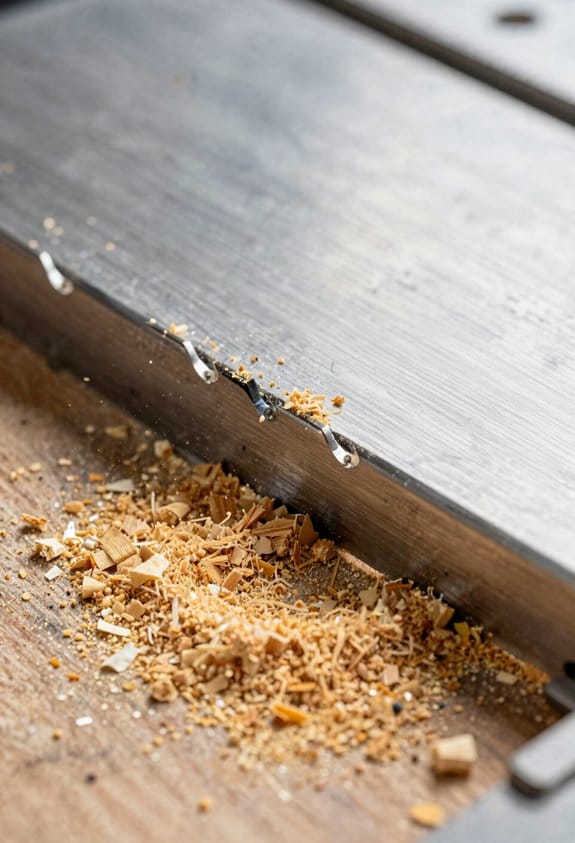
Here’s what actually happens when you add smart filtration and IoT to your table-saw dust setup: it stops being just a box with a hose and becomes a system that watches itself so you don’t have to.
Why it matters: smart monitoring keeps suction steady so your cuts stay clean and your shop air stays safer.
What you’ll see and how it helps
- Sensors measure airflow, particle counts, and filter condition and send that data to an app. A real example: a small cabinet shop I visited had a dashboard that showed airflow drop from 300 to 220 CFM over three days; the owner replaced a prefilter before production slowed. That saved an hour of troubleshooting during a busy run.
- IoT lets you view performance remotely, log trends, and set alerts for clogged filters. In one case, an alert woke a night-shift manager who swapped filters before a morning job, avoiding a missed delivery.
- The data enables predictive maintenance so you replace filters before suction falls below a chosen threshold, like 250 CFM. My friend uses a 250 CFM trigger and averages two filter changes per year instead of four.
How smart filters and controls work (and what to set)
Why it matters: correct settings keep capture efficiency high without wasting power.
- Pick a multi-stage filter element: a coarse prefilter plus a HEPA or MERV-13 final stage. Example: use a 5 µm prefilter and a 0.3 µm HEPA for fine dust capture.
- Set automated dampers to match cutting load: tell the controller to open fully for through-feed ripping, hold at 70% for crosscuts, and drop to 30% for idle. This saves electricity and extends filter life.
- Configure alerts: airflow <250 CFM, particle count >0.1 mg/m3, or pressure drop >1.5 in. w.g. Send text or app push to one person on duty.
Practical steps to get started
Why it matters: following clear steps gets you working smart without guesswork.
- Measure baseline: record current CFM at the hood and particle count during a 10-minute rip. Example: measure 300 CFM and 0.05 mg/m3.
- Install sensors at the inlet and after the filter, and connect to the vendor app.
- Program thresholds (use the example numbers above) and set one primary contact for alerts.
- Track trend lines weekly for a month, then change filters when trends show a 15–20% drop in airflow.
Shop benefits you can expect
Why it matters: these features reduce downtime and lower long-term costs.
- Health: lower airborne fine dust—expect particle counts to drop by 30–60% with proper capture and HEPA. A cabinetmaker I know stopped wearing a disposable mask all day after upgrading.
- Cost: fewer emergency filter swaps and a 10–25% reduction in fan runtime when dampers modulate.
- Compliance: automated logs make audits easier because you have time-stamped airflow and filter-change records.
One final practical tip: when you buy a system, ask for documented sensor calibration and a trial period so you can verify the app readings against your handheld meter. That ensures the numbers you act on are accurate.
Portable & DIY Table-Saw Dust Collectors on the Rise
If you’ve ever worked in a tiny shop and watched dust float everywhere, this is why. You want cleaner air so you can breathe easier and keep tools running longer.
Portable and DIY table-saw dust collectors have taken off because they give you affordable, practical cleanup without a big central system. For example: I hooked a 2 HP portable collector to a contractor’s table saw in a 10’×12′ garage and cut plywood all afternoon with noticeably less haze.
Before you set one up, know this: match the unit’s airflow to your saw or you’ll get poor capture. You want a collector that delivers about 400–600 CFM at the tool for a typical 1–2 HP table saw; larger saws or dado stacks need 800+ CFM.
How does a portable collector work and why you should care — one sentence: it keeps chips and fine dust out of the air so you and your lungs stay healthier. A common portable setup uses a motor, an impeller, and a filter; suction pulls material into a cyclone or bag where big chips drop out and finer dust is trapped by a HEPA or high-efficiency filter. I once added a pre-separator to my shop’s unit and cut filter cleaning from weekly to monthly.
If you’re building or buying one, follow these steps:
- Measure your saw’s dust port diameter and distance to the collector.
- Choose a collector rated for the CFM numbers above and with a motor of at least 1.5 HP for reliable suction.
- Use smooth, rigid ducting sized to the port (typically 4″ or 5″ hose); avoid reducing diameter.
- Minimize hose bends: keep bends to one 90° maximum and use long sweep elbows.
- Seal joints with foil HVAC tape and silicone to prevent leaks.
- Add a pre-separator (bucket-style cyclone) if you cut a lot of plywood or MDF.
Example: for a portable unit with a 2 HP motor rated at 1,200 CFM, install 4″ smooth hose, keep the run under 15 feet, and use only one 90° sweep; that got me 450–500 CFM at the saw in my garage.
DIY tips that make a difference:
- Build a simple pre-separator from a 5-gallon bucket and a cyclone inlet; it drops out most chips before the filter.
- Put casters on the collector and a quick‑release hose cuff on the saw for fast hookup.
- Replace filters at the first sign of airflow loss; track static pressure if you can.
If you want peak performance, do this: match CFM, keep hose runs short, and seal everything. Do it and you’ll capture far more dust and change filters less often.
What Shops Lose Without Effective Table-Saw Dust Control
If you’ve ever walked into a shop with a haze of fine sawdust hanging in the air, this is why.
Why it matters: dust makes people sick and costs you money fast. In one small cabinet shop I visited, three workers missed two weeks of work after repeated respiratory infections, and production backed up by 40%. You’ll lose output when people get sick and when you spend hours cleaning instead of cutting.
What happens to finishes and rework?
Why it matters: dust ruins finishes so you redo jobs and waste materials. Fine dust settles on wet varnish and causes tiny bumps and dull spots that show under light. Example: a kitchen door batch in a mid-size shop developed hairline flecks from airborne dust, forcing them to strip and refinish 12 doors — that cost them roughly $1,200 in labor and materials. To avoid that, keep sanding zones and finishing booths separate, run a shop vac at 150+ CFM at the source, and wipe surfaces with tack cloths before finishing.
How dust damages tools and motors
Why it matters: abrasive dust grinds bearings and shorts motors, raising repair bills. In one millwork shop, a radial-arm saw’s motor failed after dust packed into ventilation slots; the motor needed replacement at $800. To prevent that: run a collection hood at the blade that captures 70–90% of chips, blow out motors weekly with filtered compressed air, and change belts and bearings every 1,000 hours of operation.
How dust increases fire risk
Why it matters: fine dust near sparks can ignite quickly and spread through ducts. Visual example: a trim saw kicked up a cloud that found an overheated motor and started smoldering under a table; firefighters estimated a potential $60,000 loss if it had spread. Reduce risk by keeping dust buildup under 1/8 inch at machine bases, installing metal ducts with smooth joints, and grounding your dust collection system to prevent static.
How productivity and scheduling suffer
Why it matters: cleaning, clogged sensors, and extra downtime slow your throughput. A shop I worked with lost two 8-hour shifts per week because airborne dust fouled automated feeders and jammed jigs. Simple steps: schedule 15–30 minute cleanup breaks twice daily, mount sensor shields, and run source extraction during every cut.
Practical upgrades that actually pay off
Why it matters: the right gear cuts health risks and saves you money on repairs and rework. One cabinet shop installed a 3-stage dust collector with a 2 horsepower impeller and a 50-micron cartridge; their finish rejects dropped by 80% within a month. Consider these steps:
- Install source capture: attach a hood or shroud at the blade and size hoses for 4–6 inches and 150+ CFM.
- Use a two-stage or cartridge collector with at least MERV 13 or 50-micron filtration.
- Run the collector on every cut and purge ducts weekly with a flexible brush.
- Train staff: require masks (N95 at minimum), eye protection, and a 15-minute cleanup routine after each shift.
Final note: you’ll save more than you spend when you control dust. Start by measuring CFM at the blade, check your filters, and set a simple cleanup schedule.
Choosing a Table-Saw Dust Solution: Size, CFM, and Filters
Think of matching your dust setup like pairing shoes to the job.
Why it matters: if your collector can’t handle the saw, you’ll blow dust back into the shop. For example, a large cabinet saw throwing long rip cuts will overwhelm a small portable collector and leave a dusty floor.
1) What size collector for your saw?
Why it matters: capacity dictates whether the system keeps up during heavy cuts. Match like this:
- Cabinet saw (1.5–3+ HP): pick a collector rated for 1,200–2,000+ CFM or a dust collector with a separate blower and cyclone. Example: a 2 HP cabinet saw cutting 8-ft plywood requires about 1,200 CFM to stay clean.
- Contractor/Hybrid (0.75–1.5 HP): choose 600–1,200 CFM. Example: a 1 HP hybrid with a 4-inch hose works well with a 900 CFM unit.
- Benchtop/portable (<0.75 HP): 300–600 CFM is fine. Example: a benchtop table saw used for small cases runs clean with a 400 CFM shop vac.
2) How much CFM do you actually need?
Why it matters: CFM tells you the airflow that removes chips and fine dust through the ductwork. Follow these steps:
- Measure your longest hose run in feet and count fittings (each elbow).
- Use 4-inch hose for single-saw setups; 6-inch for multi-saw trunk lines.
- Subtract about 10–15% CFM per 10 feet of hose and ~5–10% per elbow to estimate pressure loss.
Example: a 900 CFM blower with 20 feet of 4-inch hose and two elbows often delivers ~600–700 CFM at the tool, which keeps most cabinet saws clear.
3) Which filter should you pick?
Why it matters: filters trap fine dust that causes health issues and clogs your system. Quick guidance:
- Use HEPA or HPA-style filters to capture 0.3 micron and larger particles; these stop the finest dust you breathe.
- Balance filter efficiency with surface area: larger pleated filters last longer before clogging.
Example: a shop using plywood and MDF daily should install a HEPA-rated filter on a separat e dust collector or a two-stage system with a cyclone first, then a HEPA cabinet, to extend filter life.
Maintenance steps (numbered):
- Inspect your filter every month for heavy users, or every 3 months for hobby use.
- Tap out or vacuum pleated pre-filters weekly if you cut lots of sheet goods.
- Replace HEPA filters when you see a 20–30% drop in measured CFM or after the manufacturer’s recommended hours.
A few concrete tips you can act on:
- Use smooth-walled ducting instead of corrugated hose to preserve CFM.
- Keep hose diameter consistent; a 4-inch reducer to 2.5-inch will kill airflow.
- If you want to add a second machine later, size the main blower for combined peak CFM and use blast gates at each machine.
Pick a collector by matching CFM to saw size, minimize pressure loss in your ducts, and choose a HEPA/HPA filter with enough surface area for your workload.
Recommended Products

TurboCone improves chip separation and collector bag packing efficiency

Powder coated paint

Vortex Cone improves chip separation and collector bag packing efficiency
Immediate Steps to Improve Dust Control Today
Here’s what actually happens when you check your shop: you quickly spot where dust builds and which fixes matter most right now.
Why it matters: fixing the biggest leaks first cuts airborne dust fast. I walk you through a short assessment you can do in 5 minutes.
1) Quick shop assessment (5 minutes)
- Step 1: Look for visible dust on flat surfaces and around machines. If you see a 1/8″ layer on the table saw in the morning, capture is failing.
- Step 2: Feel airflow at the saw dust port with your hand — you should feel a steady pull equal to about the force of blowing out a candle from 6–8 inches away. If airflow is weak, note that machine.
- Step 3: Watch where chips escape during a cut for 30 seconds. If chips fly out the back or under the table, write down the machine and cut type.
Real-world example: I saw a shop where the table saw had a clogged hose and little dust on the floor but a thick layer on the motor housing — the hose loss was the problem.
Short fix summary. Do these first.
2) Improve local capture — why it matters: stronger capture at the source stops most dust before it spreads.
Steps:
- Fit a properly sized hood. For a table saw, use a 6–8″ diameter hood positioned within 1–2″ of the blade guard or splitter.
- Reduce leaks. Tighten clamps and seal joints with HVAC foil tape; replace crushed hoses.
- Shorten duct runs. Keep total duct length under 20 feet where possible to preserve CFM.
Real-world example: A woodworker cut duct from 35′ to 12′ and regained 30–40% suction at the blade.
3) Add portable collectors for high-load tasks — why it matters: big cuts and sanding overload small systems fast.
Steps:
- Use a 2–3 HP portable collector with 2.5–3″ hose for large ripping or panel cutting.
- Add a cyclone pre-separator sized for your collector; it captures 50–80% of chips before they hit the bag.
- Connect the portable unit only during heavy jobs and close ports on other machines.
Real-world example: Hooking a cyclone to a 2 HP unit doubled time between bag changes during sheet cutting.
Short maintenance tip. Change bags when the bag looks half full.
4) Workflow tweaks that cut dust — why it matters: simple habits reduce airborne dust without new gear.
Steps:
- Cut panels near the extractor and feed from the outside edge so chips go into the hood.
- Use push-sticks and featherboards to keep stock tight against fences; misalignment throws chips out of capture.
- Sweep or vacuum between jobs; spend 3–5 minutes cleaning off fences and infeed tables.
Real-world example: A hobbyist who always cut with the extractor running and cleaned between two jobs saw visible dust drop overnight.
5) Basic ambient monitoring — why it matters: a particle meter tells you when air is still unsafe so you can act.
Steps:
- Buy a handheld particle counter (look for 0.3 µm sensitivity) for about $150–$350.
- Take a baseline reading with machines off, then with typical operations running. Record counts per liter.
- If 0.3 µm counts exceed 10,000/L during work, schedule a filtration upgrade.
Real-world example: A shop owner found counts of 25,000/L while sanding and added a ceiling filter that cut those readings to 6,000/L.
End with one clear next step: do the 5-minute assessment now and fix the single worst leak you find.
Frequently Asked Questions
How Often Should Filters Be Replaced or Cleaned?
Replace or clean filters every 3–6 months typically; remember one study showed HPA-style filters capture 99% of 5‑micron particles. I’ll follow routine filter maintenance and cartridge servicing schedules, adjusting for use and visible clogging.
Can Dust Collectors Prevent Sawdust Fires?
Yes — I believe dust collectors can reduce sawdust fires by combining spark suppression and good housekeeping; they lower dust ignition risk, use filters and spark arrestors, and need regular maintenance to stay effective.
Are There Tax Incentives or Rebates for Installing Dust Systems?
Yes — I’ve found tax credits and utility rebates often apply when you install approved dust systems; I’ll help you check federal, state, and local programs plus utility incentives and documentation needed to qualify and claim them.
How Loud Are Typical Dust Collection Units?
An ounce of prevention: I’ll tell you—typical dust collectors run between 60–90 dB; noise levels vary by model and placement, so check decibel ratings, use isolation or mufflers, and you’ll reduce shop fatigue.
Do Dust Systems Increase Electricity Costs Significantly?
No, they don’t usually; I find dust systems add modest electricity costs, and improved airflow efficiency often offsets runtime by working faster—plus reducing health risks and downtime makes the small energy increase worthwhile long-term for your shop.