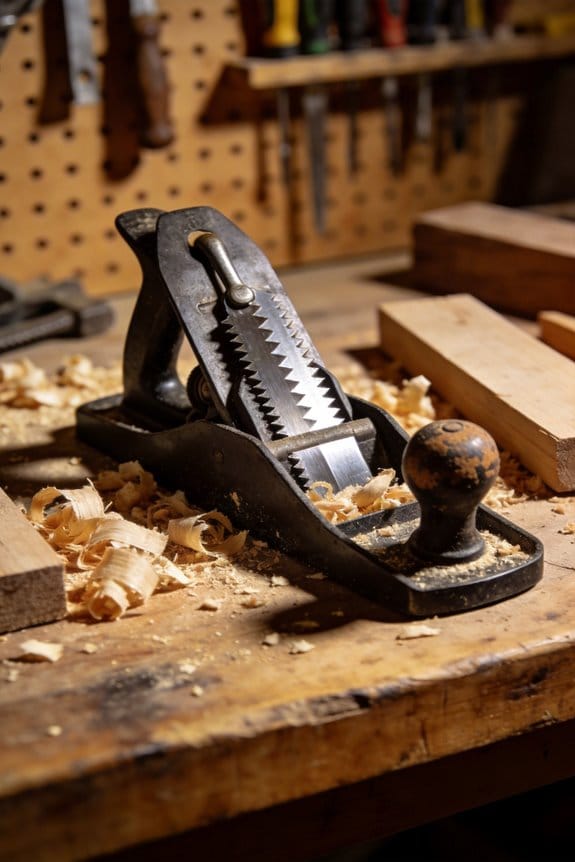
You thought a board had enough length for a project, only to lose inches after planing and wonder where your material vanished. You’re standing over a table of parts asking, “Why did my final pieces come up short even though I measured carefully?”
Most people underestimate how allowances, cutter calibration, and feed rates interact, so they cut too close and force extra passes. This article will show exactly how to set correct allowances from multiple measurements, calibrate and check cutter runout, and tune feed rates so you preserve usable length and avoid needless rework.
Follow these steps and you’ll consistently save material and get pieces to final size with fewer passes. It’s easier than it sounds.
Key Takeaways
Here’s what actually happens when you estimate how much to plane off a board: you guess, you take a few test passes, and sometimes you remove too much. Why it matters: wasted material costs you time and money.
1) Measure and document planing allowance
- Why it matters: you avoid surprises and over-removal by recording real numbers.
- Steps:
- Measure thickness at five spots along the board (both faces and each end).
- Record the smallest reading as your baseline and the largest as the problem spot.
- Set allowance = (largest − smallest) + 0.8 mm buffer.
- Example: a 19.2 mm spot and a 18.6 mm spot gives allowance = 0.6 + 0.8 = 1.4 mm.
- Tip: mark allowance on the board end with a pencil and your initials.
If you’ve ever ruined a panel by hogging off too much, this will help you stop doing that. Keep a short log for each board.
Think of planing depth like shaving: small strokes, fewer mistakes. Why it matters: light passes preserve thickness and reduce rejects.
2) Use minimal per-pass depths and multiple passes
- Why it matters: lighter cuts prevent taking off more than you can afford.
- Steps:
- Set per-pass depth at 0.3–0.8 mm depending on tear-out risk.
- If stock is unstable or glue-ups are delicate, use 0.3–0.5 mm.
- Do multiple passes until you reach the documented allowance.
- Example: to remove 1.4 mm, run four 0.35 mm passes, then one 0.3 mm pass.
- Tip: count passes instead of eyeballing thickness.
Before you plane warped or green wood, stabilize it so you don’t remove extra material everywhere. Stabilize first.
The fastest way to reduce rework is consistent cutting rather than guessing settings. Why it matters: uneven knives or gaps cause tear-out and force you to rework boards.
3) Calibrate knives, runout, and knife-to-hood gap
- Why it matters: precise setup prevents snipe and inconsistent surfaces that need more planing.
- Steps:
- Check cutterhead runout with a dial indicator; keep under 0.05 mm.
- Verify knife seating and alignment; tighten knife clamps to spec.
- Set knife-to-hood gap to the manufacturer’s value, typically 0.2–0.5 mm.
- Example: a kitchen drawer front showed snipe only on one end; runout measured 0.12 mm and fixing it eliminated the defect.
- Tip: mark knives with a number and record orientation after each change.
You don’t need to overcut every board because a few are warped. Why it matters: targeted allowance saves wood and effort.
4) Tune feed rate and cutterhead for uniform chips
- Why it matters: consistent chip size reduces tear-out and surface waste.
- Steps:
- Start at medium feed (e.g., 6–10 m/min on a planer) and adjust until chips are thin, ribbon-like, and even.
- If chips are powdery, slow the feed; if long stringy chips form and burn, speed up slightly.
- Recheck after each knife change or depth adjustment.
- Example: switching from 4 m/min to 8 m/min transformed ragged cuts into even ribbons on a 100 mm wide board.
- Tip: listen for a steady hum — big thumps mean uneven cutting.
If you’ve ever sanded an entire face to hide tear-out, this prevents that. End with the chip behavior you want: even ribbons.
5) Pre-flag and stabilize problem stock
- Why it matters: targeted extra allowance prevents cutting every board more than necessary.
- Steps:
- Flag warped spots by marking the high areas and measuring how much they protrude.
- Add allowance only at those spots; don’t increase the whole board’s allowance.
- Stabilize green wood by clamping or sealing ends before planing to reduce movement.
- Example: a batch of 12 boards had three with crown; you added 1.5–2 mm only to those three and saved the rest.
- Tip: use sticky notes on each flagged board with the exact extra allowance.
It sounds obvious, but measuring specific problem areas beats blanket overcutting every time.
Quick Planing Checklist to Cut Waste Now
If you’ve ever set up a planer and watched good wood turn into scrap, this is why.
Why it matters: small setup changes save material and cut power use.
1) Check blades first.
- Why: dull or nicked blades force you to take deeper cuts.
- How: remove the knives, hold them up to bright light to spot nicks, and measure straightness by sighting along the edge; replace or sharpen if you see gaps larger than 0.5 mm along the cutting edge.
- Real example: I found a 1 mm chip in one knife and avoided ruining a 6-foot oak board by swapping the blade before the run.
- Takeaway: blades with visible nicks >0.5 mm get serviced.
2) Align and square the fence.
Why it matters: an out-of-square fence causes tapered cuts and wasted trim.
- How: use a 12-inch combination square or a digital angle gauge to set the fence at exactly 90° to the table; tighten the fence bolts to the manufacturer’s torque spec or hand-tight plus a quarter turn.
- Real example: setting the fence with a square stopped a 3/8-inch taper across a 4-foot maple shelf I was milling.
- Takeaway: fence true to 90° stops wasted edge trim.
3) Set feed rate and depth in small increments.
Why it matters: aggressive feeds and cuts waste wood and strain the motor.
- How: start with depth per pass of 0.5 mm (0.02 in) for hardwoods and 1.0 mm (0.04 in) for softwoods; runfeed at a moderate pace—aim for 6–12 board feet per minute on a benchtop planer—then increase slightly only if the surface stays clean.
- Real example: using 0.5 mm passes on walnut gave a tear-out-free face after three passes instead of one deep cut that required sanding away 2 mm.
- Takeaway: 0.5–1.0 mm per pass preserves wood and motor health.
4) Do a light finishing pass.
Why it matters: a light pass evens out snipe and refines edges without removing much thickness.
- How: after your main passes, reduce depth to 0.2–0.3 mm (0.01 in) and run one slow, steady pass.
- Real example: a 0.25 mm finish pass removed ragged fibers on a pine board and avoided sanding off 1/16 inch.
- Takeaway: a single 0.2–0.3 mm pass fixes edge roughness.
5) Keep a visible checklist.
Why it matters: routine checks stop repeat mistakes that waste boards.
- How: tape a laminated checklist near the machine with these items: blade condition, fence square, feed speed set, depth per pass, dust collection on. Tick each item before you run material.
- Real example: a laminated checklist prevented me from forgetting to switch on the dust collector, which otherwise would have reduced cutter life and increased sanding time.
- Takeaway: one laminated checklist reduces errors.
6) Sort scrap immediately.
Why it matters: separating usable offcuts saves them from landfill and gives you test pieces.
- How: label two bins—“usable” (pieces ≥6×6 inches or long strips) and “waste” (smaller than that). Keep a small stack of labeled test pieces for trial passes.
- Real example: a 7×10 inch offcut saved a weekend project because I used it for a color test instead of cutting a new board.
- Takeaway: a 6×6 inch rule keeps useful offcuts handy.
Follow these steps: check blades, square the fence, set feeds and depths in small increments, do a 0.2–0.3 mm finish pass, use a laminated checklist, and sort scraps by size. These actions reduce rework, save timber, and cut energy use.
Measure and Set the Right Planing Allowance

Before you measure and set a planing allowance, know why it matters: it prevents surprises and saves material when you surface rough stock.
Here’s how to pick the right allowance for thickness and edges.
- Measure the stock at 6 points: both ends, both edges, and the center on each face.
- Record the highest reading from each set of three measurements per face.
- Subtract your target thickness from the highest reading to get the baseline allowance.
- Add 1–2 mm for machine variation on a handplane or benchtop planer; add 3–4 mm for a big jointer/planer combo.
- Add 0–2 mm if the board has a cup, twist, or visible winding you’ll flatten; add 0–1 mm for seasonal moisture movement if the stock will sit a while before finishing.
Example: a board reads 26.2, 25.8, 25.5 mm across a face and your finished target is 24 mm. Baseline = 26.2 − 24 = 2.2 mm; add 1.5 mm for your benchtop planer and 1 mm for a slight cup, so set a planing allowance of 4.7 mm.
Think of a planing allowance like a buffer, not waste.
When you plan for edges and profiles, state why: decorative edges need extra stock so the profile cuts cleanly.
- Measure the final profile depth; for a 6 mm ogee, allow at least 2 mm extra per edge for fairing and test cuts.
- If you need a molded edge plus a matching joint, add another 1–2 mm.
- Mark allowances on the stock with a pencil and triangle gauge before you cut.
Example: you want a 6 mm roundover on a tabletop edge and also must trim the board to width; leave 3–4 mm per edge before profiling so you can cut accurately and router the profile without burning.
You’ll also account for seasonal moisture and movement because wood changes thickness. Measure moisture content if you can; for indoor projects target 8–10% MC and reduce your allowance by about 0.5–1 mm if stock is already at that range. Short sentence.
How to actually remove the material, step by step, and what to check.
- Rough-cut to within 2–3 mm of your calculated allowance so the jointer/planer doesn’t have to hog off big chips.
- Take light test passes: start at half your allowance and measure again.
- Stop when the high spots are within 0.5 mm of your target for final surfacing.
- Do final passes at 0.5–1 mm per side for a clean surface and minimal tearout.
Example: you set a 4 mm allowance, rip to within 2 mm, plane off 1.5 mm, measure, then finish with a 0.5 mm pass.
A few practical tips you’ll use every time:
- Use a straightedge and feeler gauge to find cups; mark high edges in pencil.
- For weird twists, clamp and plane against a reference caul rather than chasing low spots.
- Keep allowances small to save lumber and reduce sanding and machine time.
If you follow these steps, you’ll consistently end up with the right final dimensions and minimal waste.
Recommended Products

【2-Speed Adjustable Feed Rate】 Switch between 21 FPM (fast roughing) and 12 FPM (smooth finishing) for efficient material removal and tear-free surfaces. Perfect for hardwoods like oak, maple, and softwoods.

Planes Max. 6 inches thick and 13 inches wide

SMOOTH CUTS: Helical-style cutter head, with easy-to-change blades, provides a clean cuts.
Adjust Planing for Green, Kiln-Dried, and Rough Boards

If you’ve ever stood staring at different boards and wondered where to start, this will help.
Why it matters: picking the wrong planing allowance or technique wastes wood and can ruin a board. For green lumber, you’ll leave an extra 1/8″–3/16″ (3–5 mm) of material and take lighter passes so the board doesn’t cup as it dries. Example: a freshly milled 1″ green plank that later cups 1/8″ on one face — leaving 3–5 mm saved you from having to glue on a strip later.
How to plane green boards:
- Measure thickness at several points and mark the thinnest spot.
- Set the jointer/planer to remove 1–2 mm per pass (about 1/32″–1/16″).
- Leave 3–5 mm (1/8″–3/16″) extra final thickness for moisture movement.
- Take an initial light pass across the width to relax stresses, then continue with even light passes until you reach your allowance.
Real-world example: when flattening a 6″ red oak green board, start with 1 mm passes and stop 5 mm above final thickness; the board may relieve stress and cup slightly during drying.
Why it matters: kiln-dried wood is dimensionally stable so you can remove less waste and focus on surface quality. For kiln-dried stock, reduce allowance to 1–2 mm (1/32″–1/16″) and remove machine marks or warp, not moisture problems. Example: cabinet-grade maple that’s kiln-dried usually needs only a 1 mm skim to remove planer marks before glue-up.
How to plane kiln-dried boards:
- Verify moisture content with a meter; aim for 6%–8% for interior work.
- Set cutter depth to 0.5–1 mm per pass (about 1/64″–1/32″).
- Take cross-grain face jointing passes to flatten, then thickness plane to final size while keeping allowance minimal.
Real-world example: prepping 8/4 kiln-dried maple for a tabletop — check MC at 6.5%, take 1 mm passes to remove snipe and marks, and you’ll keep nearly all usable thickness.
Why it matters: rough-sawn boards can be far out of flat, so you remove more material to establish reference faces. On rough boards, plan for heavier initial cuts but follow grain to avoid tear-out; remove 2–6 mm (1/16″–1/4″) on the first passes depending on how rough the surface is. Example: a rough 2″ pine board with pronounced milling marks might need 4 mm removed to get a true face.
How to plane rough boards:
- Use the jointer to establish one flat face; take 2–6 mm per pass if needed, but don’t exceed tool capacity.
- Mark the flattened face as your reference, then use the planer to bring the opposite face parallel, taking 1–3 mm per pass.
- Watch grain direction: when you must cut against the grain, use back cuts, a small shaving, or a higher cutter speed to reduce tear-out.
Real-world example: a 10″ rough-sawn white pine board required two heavy jointer passes of 3 mm each, then three planer passes at 1.5 mm to reach final thickness with minimal tear-out.
Final practical tips:
- Always check moisture content before final sizing; aim for 6%–12% depending on region and use. This helps avoid surprises later.
- If you see spring or twist after initial passes, stop and reassess — you may need to leave extra allowance or dry the board longer.
- Keep blades sharp; dull cutters force heavier cuts and increase tear-out.
Key takeaway: match your allowance and cut size to the board’s moisture and surface condition — green: leave 3–5 mm and take light passes; kiln-dried: 0.5–2 mm and skim for finish; rough: 2–6 mm to establish flat faces.
Calibrate Planers and Moulders to Minimize Material Loss
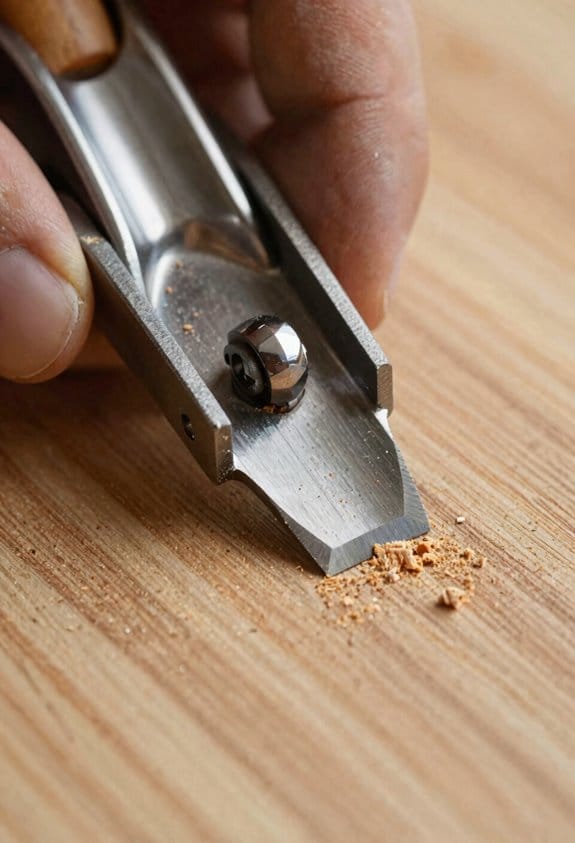
Before you set cutters, know why precision saves wood: every extra 0.5 mm you remove from a board multiplied by dozens of pieces becomes lost product and profit.
1) Check blade clearance and cutterhead runout — why it matters: excess gap wastes wood and too little causes burning or kickback. Real-world example: on a batch of 2.4 m long decking boards, a 0.5 mm extra pass on each board cost me three full boards over a 200-piece run. Steps:
- Measure knife-to-hood gap with feeler gauges; aim for 0.2–0.4 mm clearance per knife edge.
- Spin the cutterhead and measure runout with a dial indicator; keep runout under 0.05 mm.
- Re-seat knives and torque to the manufacturer’s spec (usually 8–12 Nm).
End with the dial reading under 0.05 mm.
If you’ve ever had a planer scorch a face, here’s how to set cutting depth so you only take what’s allowed: you want each pass to remove the allowance, not guess at it. Real-world example: when planing kiln-dried 19 mm stock to 18 mm final, I set 0.5 mm per pass and did two passes, which left a smooth face and avoided tear-out. Steps:
- Confirm your planing allowance: green wood +1.5–2.0 mm, kiln-dried +0.5–1.0 mm, rough-sawn +2.0–3.0 mm.
- Set cutting depth to 0.3–0.8 mm per pass depending on species hardness (hardwoods lower, softwoods higher).
- Run a test piece and measure with calipers; adjust until final thickness is within ±0.1 mm.
End with the caliper showing the target thickness.
Think of feed rate like tempo in music: steady speed makes clean chips and consistent surfaces. Why this matters: inconsistent feed leaves ripples or forces extra sanding. Real-world example: on a moulder run of softwood door stiles, increasing feed from 12 to 18 m/min eliminated chatter and cut sanding time in half. Steps:
- Start at manufacturer-recommended feed (often 10–15 m/min for planers; 12–20 m/min for moulders).
- Increase in 2 m/min increments while inspecting chip size and surface finish.
- Stop when chips are uniform and surfaces need little sanding.
End with a recorded feed number that produced consistent chips.
You don’t need guesswork for stock support and fence alignment — align them so parts exit true and need minimal sanding. Why it matters: skewed pieces force recuts or hand-sanding. Real-world example: aligning the outfeed table and fence on a moulder reduced edge bowing on window trim and cut sanding by 70%. Steps:
- Verify infeed and outfeed tables are coplanar with a straight edge; shim to level if offset exceeds 0.5 mm over 1 m.
- Check fence perpendicularity with a square; adjust until deviation is under 0.3 mm.
- Support long pieces with roller stands set to the same height as tables.
End with table coplanarity within 0.5 mm per meter.
Document settings by species and moisture level so you and your operators repeat winners; this keeps material loss low across runs. Why it matters: good records stop re-learning and reduce scrap. Real-world example: a one-page settings sheet for oak at 8–10% moisture (knife gap 0.3 mm, feed 12 m/min, depth 0.4 mm) saved a crew an hour of setup on a 300-piece order. Steps:
- Create a simple chart: species, moisture %, knife gap, cutterhead runout tolerance, depth per pass, feed speed.
- Tape a laminated copy at the machine and save a digital photo in your job folder.
- Train operators with one timed demo run and one measured test piece.
End with a photo of the settings in the job folder.
Quick checklist before a production run:
- Knife gap set to 0.2–0.4 mm.
- Runout under 0.05 mm.
- Cutting depth 0.3–0.8 mm per pass.
- Feed speed tuned for uniform chips.
- Tables and fence aligned to under 0.5 mm per meter.
- Settings documented and operator-trained.
Do these steps and you’ll cut only what you need, save material, and keep runs predictable.
Recommended Products

Compact with less weight for easy transporting to the jobsite

The thickness planer features a two-speed operation with feed rates of 26 FPM for quick dimensioning and 16 FPM for perfect finishes.

Select Raw Boards Sized to Net Components

If you’ve ever bought lumber and spent hours surfacing and ripping it down, this is why.
Why it matters: matching board size to your finished parts saves you time, reduces waste, and keeps more usable wood.
1) Check dimensions before you buy.
- Step 1: measure thickness and width with calipers or a good ruler to the nearest 1/32″ (0.8 mm).
- Step 2: compare those numbers to your cutting list and note any pieces that need more than 1/8″ taken off a face or more than 1/4″ off an edge.
Example: I once bought 8/4 white oak where every board was 1/2″ over thickness; that required extra planing and I lost usable length on all six boards.
2) Favor boards that need minimal removal.
- Why it matters: less planing means less dust and more finished parts per board.
- Step 1: mark acceptable boards on your list and prioritize ones within 1/16″ of final thickness.
- Step 2: avoid boards that require more than two passes on the planer.
Example: For a cabinet project I picked boards that were 13/16″ instead of a full inch; I saved two planer passes per board and kept longer clear runs.
3) Document your sources.
- Why it matters: tracking suppliers helps you buy consistent sizes next time.
- Step 1: write supplier, batch date, and measured sizes on a paper or phone note.
- Step 2: rate each delivery 1–5 for consistency.
Example: After three deliveries from one yard I recorded that their 4/4 maple averaged .98″ thickness, so I ordered a full skid from them next time.
4) Place defects where offcuts are acceptable.
- Why it matters: you keep long clear runs for critical parts and still use imperfect areas.
- Step 1: lay out each board and mark knots, checks, and cups with a pencil.
- Step 2: plan cuts so defects fall in waste or on parts that will be hidden or trimmed.
Example: On a table top I oriented boards so two small knots landed in the apron offcuts, preserving two 48″ clear boards for the top.
5) Match size with grading and measurement.
- Why it matters: combining accurate measurement with grade selection speeds layout and machine setup.
- Step 1: sort boards by measured thickness and visual grade before you start cutting.
- Step 2: stack same-thickness boards together and label them for machines.
Example: For a batch of chair rails I stacked four boards all at 11/16″ and set the router fence once, rather than adjusting between each board.
Quick practical numbers to use:
- Aim for boards within 1/16″ of final thickness for minimal planing.
- Allow up to 1/8″ for face correction and 1/4″ for edge trimming on less critical pieces.
- Reject boards if you must remove more than 3/8″ total to reach final dimensions.
If irregularities show up, pick boards whose defects are near ends or edges so you can cut them away without wasting long grain. Use labeled stacks, a short measurement sheet, and a simple 1–5 supplier rating to make this repeatable.
Nesting and Cutting-List Tips to Preserve Planing Allowance
If you’ve ever laid out parts only to find you need more planing allowance, this is why.
Why this matters: keeping planing allowance small saves material and time while making thickness predictable. For example, if you pick boards that match your net sizes, you’ll avoid passing parts through the planer two extra times to reach final thickness.
1) How do you pick boards to minimize planing allowance?
Why it matters: starting with the right stock cuts down surfacing work.
Steps:
- Measure the net width and thickness you need for each part and write them down (e.g., 3/4″ × 5 1/2″).
- Choose boards whose sawn thickness is within 1/16″ of your final thickness whenever possible.
- Pick boards that are at least 1/8″ wider than the widest net dimension to allow for straightening cuts.
Real-world example: I needed 12 rails at 3/4″ × 3″. I bought 8/4 stock that was 13/16″ thick so I only had to remove 1/16″ per face, saving me one planer pass per piece.
2) How should you nest parts on a cutting list so you don’t lose the planing advantage?
Why it matters: smart nesting keeps offcuts small and preserves chosen thicknesses.
Steps:
- Group parts by final thickness first, then by grain direction, then by similar widths.
- Lay parts with the same width end-to-end to reduce crosscuts; lay different widths side-by-side to use full board width.
- Use paper mockups or a nesting program and test at full scale before committing.
Real-world example: For cabinet sides (two at 3/4″ × 30″) and shelves (five at 3/4″ × 24″), I placed all sides in one run and all shelves in another, so I only changed the planer setting once between groups.
3) When should you trim edges and how much should you leave?
Why it matters: trimming too early forces larger allowances and more waste.
Steps:
- Delay final edge trimming until your nesting is locked in.
- Do only the minimum straightening cuts (about 1/16″–1/8″) to remove cup or twist before layout.
- Reserve final trimming to the last machining step after parts are cut and fitted.
Real-world example: I left raw edges on a 96″ board until nesting was finalized and only removed 1/8″ for straightening; that left enough width to fit three parts instead of two.
4) What details should you record when you refine the cutting list?
Why it matters: exact specs prevent guesswork during cutting and planing.
Steps:
- Record net dimensions, tolerance (±1/32″ or ±1/16″), and which edge is the preferred face or edge.
- Note board ID, sawn thickness, and any defects or knots to avoid.
- Re-run the layout after updating this list and mark the board physically.
Real-world example: I labeled each board with a number and its sawn thickness; when I came back a week later, the cutter knew which face was the show side and which edge to waste for straightening.
Final practical tip: plan for planing by limiting how much thickness you expect to remove—aim for 1/16″–1/8″ per face when possible—and organize cuts so you only change thickness sequence once or twice per session.
Track Yield and Energy Savings With Three Simple Metrics
If you’ve ever stood at a dusty workbench wondering where the material and power went, this will help.
Why this matters: tracking three simple numbers shows how changes in cutting, planing, and machine settings affect both how much usable board you get and how much energy you spend.
1) What is yield percentage and how do you use it?
Why it matters: yield percentage tells you how much of your raw board becomes finished parts so you can reduce waste.
How to calculate it (steps):
- Measure raw stock volume in cubic meters (length × width × thickness).
- Measure finished part volume after machining.
- Divide finished volume by raw volume and multiply by 100.
Example: you start with a 2 m × 0.25 m × 0.02 m board (0.01 m³). After cutting and planing you have 0.006 m³ of usable parts. Yield = (0.006 / 0.01) × 100 = 60%. That tells you to trim less or change nesting to improve yield.
Tip: track this monthly on a simple spreadsheet.
2) What is energy per unit and how do you measure it?
Why it matters: energy per unit links the electricity your machines use to the amount of finished product, so you can spot inefficient runs.
How to calculate it (steps):
- Record machine kWh used during a run from a meter or machine display.
- Measure finished volume for that same run in cubic meters.
- Divide kWh by finished cubic meters to get kWh/m³.
Example: a batch uses 8 kWh and produces 0.02 m³. Energy per unit = 8 / 0.02 = 400 kWh/m³. If a similar run later spikes to 600 kWh/m³, check feed rates, blade sharpness, or motor settings.
Tip: compare identical jobs to isolate variables.
3) What is defect rate and how do you track it?
Why it matters: defect rate shows how many parts you scrap for surface or dimension faults, which points to calibration or material issues.
How to calculate it (steps):
- Count total parts produced in a run.
- Count parts scrapped for surface or dimension defects.
- Divide scrapped by total and multiply by 100 for a percentage.
Example: you cut 150 parts and scrap 9 for tear-out or warping. Defect rate = (9 / 150) × 100 = 6%. A jump from 2% to 6% after a supplier change flags material quality.
Tip: log defect types so you can act—blunting, clamp marks, or grain issues.
Putting the three together
Why it matters: using all three lets you compare energy-yield trade-offs and find targeted fixes.
How to act (steps):
- Run a baseline: record yield %, kWh/m³, and defect % for a typical job.
- Change one variable (sharpen blade, alter feed rate, reduce planing allowance).
- Re-run the job and compare the three metrics.
Example: baseline yield 60%, energy 400 kWh/m³, defects 4%. After raising feed rate and sharpening blades, yield stays 60% but energy drops to 320 kWh/m³ and defects fall to 2%—you just improved efficiency without risking quality.
Tip: make one change at a time so you know what caused the improvement.
Start simple: measure one job this week, then repeat next week after a single tweak. You’ll see where your material and energy actually go.
Common Planing Mistakes and Quick Fixes to Avoid Excess Waste
If you’ve ever ended up with ruined boards after a pass, this is why.
Why it matters: wasted wood costs you time and money. Example: I once lost a 6-foot oak board to tearout because I skipped a blade check.
1) How do you spot and fix dull blades?
Why it matters: a dull blade tears grain and forces deeper cuts, so you get oversized shavings and ragged faces. Example: on a maple panel the blade had rounded teeth and left torn fibers along the edge.
Steps:
- Unplug the machine and remove the cutterhead guard.
- Inspect teeth visually; if tips are rounded or nicked, sharpen or replace the blade.
- Sharpen on a bench grinder or send to a service; replace with a carbide knife if you want longer life.
- Reinstall and make a 1/32″ test pass across scrap to confirm clean, even shavings.
2) How should you set feed rate and cutting depth?
Why it matters: pushing too fast or too deep causes snipe and uneven thickness. Example: I fed a 4″ wide board too quickly at 300 ft/min and got snipe at both ends.
Steps:
- Start with cutter depth at 1/64″–1/32″ per pass for hardwoods; you can go 1/16″ per pass for softwoods.
- Aim for a feed rate of 60–120 board feet per minute on a hand-held jointer or follow the manufacturer’s feed for a power planer; slow down if the motor stutters.
- Make two short test passes on scrap; if you see snipe, reduce depth by half and slow the feed by 25%.
3) How do you prevent operator fatigue and setup errors?
Why it matters: fatigue leads to sloppy adjustments that wreck material. Example: after standing poorly for an hour, I misaligned the fence and jointed a bevel into a 2×6.
Steps:
- Set your work height so your shoulders and arms are relaxed when feeding; use a roller stand for long boards.
- Take a 5-minute break every 30–45 minutes on long jobs.
- Use clamps or push blocks to keep your hands away from cutters and maintain steady pressure.
4) How do you verify fence alignment and machine calibration?
Why it matters: misalignment makes boards uneven and wastes stock. Example: a fence misaligned by 1/16″ on a 48″ pass produced a visible taper.
Steps:
- With the machine off, measure fence parallelism to the cutterhead using a straightedge and feeler gauge or a digital caliper.
- Make small test passes on scrap and measure thickness at three points along the board: near each end and the center.
- If measurements differ by more than 0.005″, tweak the fence or bed and re-test.
Final quick checklist before you run production:
- Blade sharpness: visual and test pass.
- Depth per pass: 1/64″–1/32″ hardwood, up to 1/16″ softwood.
- Feed rate: slow until consistent chips.
- Ergonomics: comfortable height, roller stands, breaks.
- Calibration: test passes, measure at three points.
Do these checks and you’ll cut back on wasted boards and extra sanding.
Frequently Asked Questions
How Does Planing Strategy Affect Indoor Air Quality and Worker Health?
Planing strategy directly affects indoor air quality and worker health: I control dust through reduced allowances and nesting, use dust control measures, and insist on respirator use so workers breathe safer air and face fewer respiratory risks.
Can Planing Adjustments Improve Furniture Structural Integrity or Joint Fit?
Like tuning a string, I can improve furniture strength and joint fit: precise grain alignment and edge squareness guarantee mating surfaces seat fully, reducing stress concentrations and gaps, so joints grip better and last longer.
What Are Cost Savings Over Time From Reduced Planing Allowances?
You’ll save steadily: I’ve seen thickness optimization and yield forecasting cut material and energy costs, raising yield and lowering disposal expenses, so over time your production costs drop noticeably while payback on process changes becomes rapid.
How Does Planing Strategy Interact With Seasonal Wood Moisture Changes?
You might think moisture ruins plans, but I adjust planing depth and grain orientation to match acclimation timing; I plan thinner allowances in dry seasons and leave extra in humid months to prevent warping and waste.
Can Smaller Shops Implement Automated Nesting Without Major Investment?
Yes — I think smaller shops can: use CNC outsourcing for cutting and leverage cloud nesting services to run optimized layouts, so you avoid big upfront costs while still improving yield, efficiency, and reducing scrap.